Sunday, December 30, 2007

They Also Served

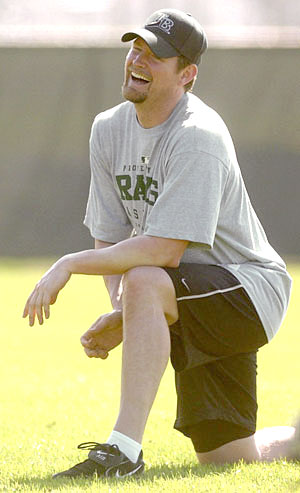
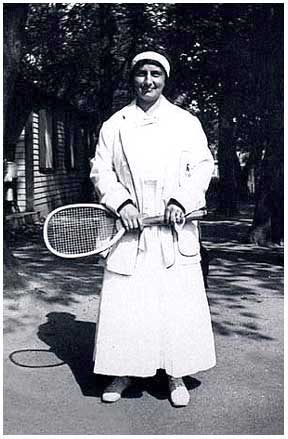
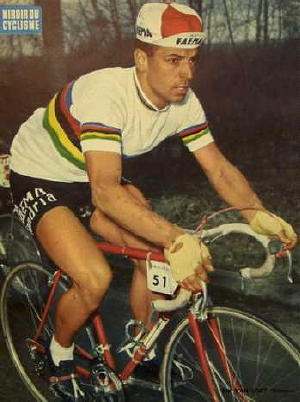
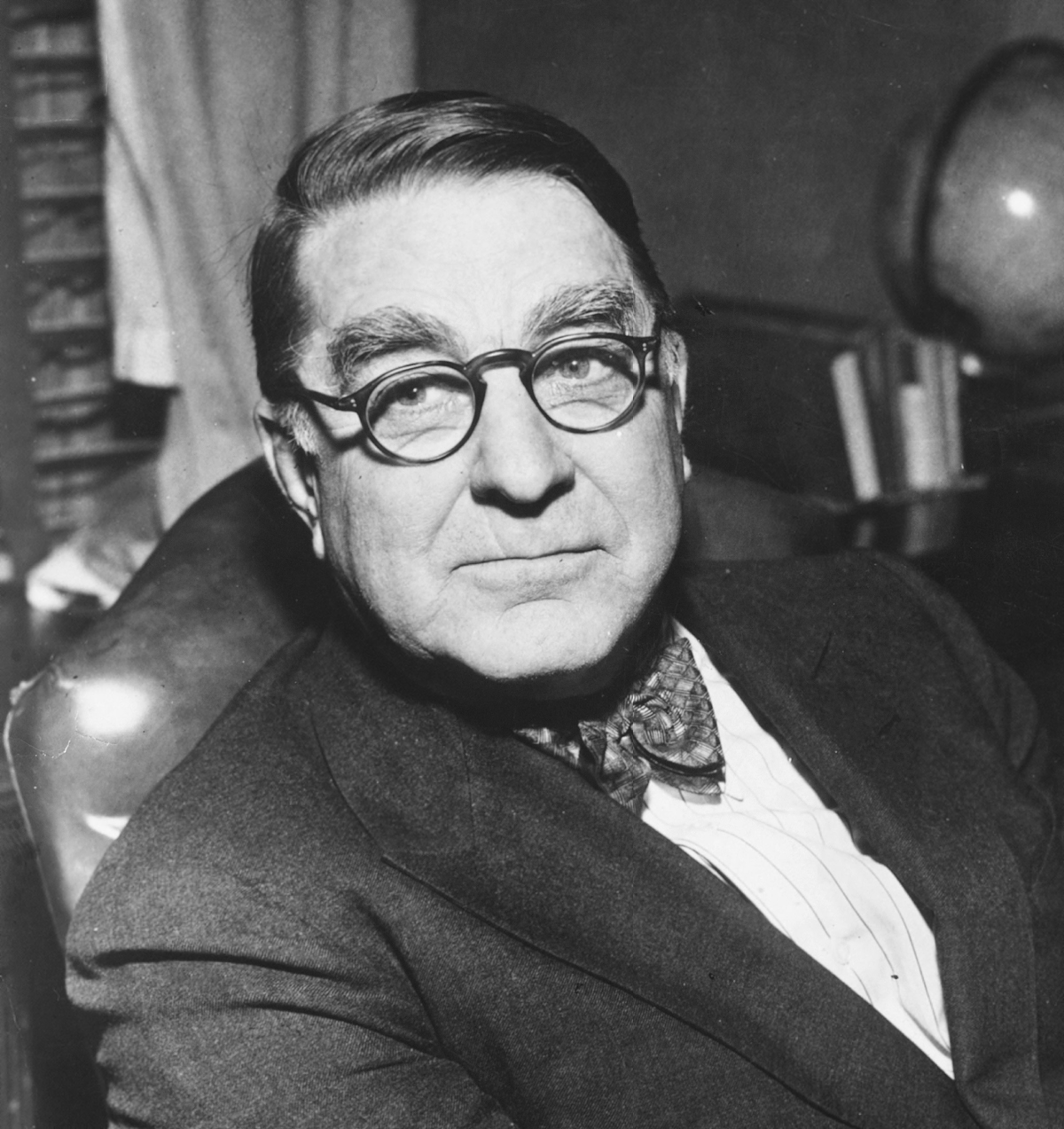
The world of sports lost a lot of luminaries in 2007 - Bill Walsh, Phil Rizzuto, Eddie Robinson, Evel Knievel and Barbaro just to name a few. Today here at No Mas we're going to take some time to remember a group of 25 lesser-known sports figures who died in the past year. Some of the people you'll read about below are more famous than others. Some were household names in their day and saw their fame quickly ebb with time. All but three essentially died of old age, and the three who didn't came to tragic ends indeed. Some were as great as great could be - 2007 saw the deaths of arguably the finest bridge player, rodeo rider and fencer that ever lived.

I was awestruck while compiling this list at what a window into the past these names provided. The entire No Mas enterprise is rooted in the idea that the history of sport is as varied, impassioned and bizarre as the history of man itself. For me, that concept is fundamental to just about everything I write, and yet never did I suspect that a group of disparate lives connected to sport, lives that all happened to end in a single calendar year, taken together would tell such a wild story of the 20th century, a story I'm quite sure I've never heard before.
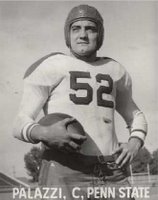


Lou Palazzi was a stand-out linebacker as a walk-on at Penn State, and played two seasons with the New York Giants. He then went on to serve 30 years in the NFL as an umpire, working three Super Bowls (IV, VII and IX) and nine NFL championships, including the epic 1958 edition. Eighty-five years old, he died on January 7th in Dunsmore, PA.

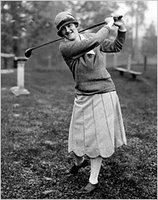
Maureen Orcutt
was a star women's golfer in the 20's who also wrote avidly about the game. She was only the second women's sports reporter in New York Times history. Orcutt golfed until she was 87 years old - she died on January 9th at the age of 99.
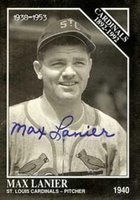


Max Lanier was 91 when he died on January 30th. He was a lefty pitcher who spent 14 seasons in the bigs, and 12 of those with the Cardinals. Max was the winning pitcher of game 6 of the 1944 World Series, the clinching victory for the Cards over their crosstown rivals, the St. Louis Browns. His son, Hal, also played in the majors.

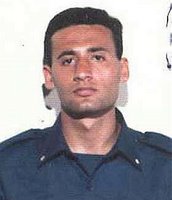
Filippo Raciti was not an athlete, but sports indirectly and most horribly caused his death. A 30-year-old Italian policeman, he died of severe liver trauma on February 2nd from injuries suffered during a riot following a Serie A match between Catania and Palermo in Sicily. The tragedy spurred national outrage in Italy against football hooliganism and caused all Italian football matches to be suspended for a week.
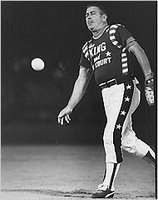


Eddie Feigner, the clown prince of softball, died at the age of 81 on February 9th. Capable of hitting 100mph with his underhand heater, in 1967 he struck out Willie Mays, Willie McCovey, Brooks Robinson, Maury Wills, Harmon Killebrew and Roberto Clemente in succession, which must be considered among the greatest feats ever accomplished in the history of bats and balls.

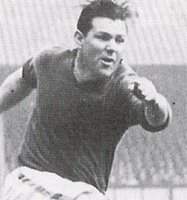
Playing for Blackpool in 1942, footballer Jock Dodds set a record that still stands today, scoring a hat-trick against the Tranmere Rovers in just two and a half minutes. Dodds, however, is most famous for his efforts with Sheffield Wednesday, helping the franchise make the FA Cup Final in 1936, which they lost to Arsenal. He was the oldest surviving player to have played in a final at Wembley when he died at the age of 86 on February 23rd.
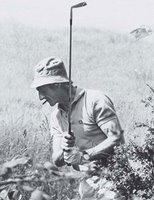


Maurice Flitcroft, God love him, is the type of sportsman you have to raise your glass to in this day and age. A duffer of the highest order whose day job was operating a crane at a shipyard, Maurice longed to play at the British Open, and eventually managed to pull it off by sneaking into the 1976 tournament under an alias. He did this despite the fact that he'd never played an 18-hole round of golf in his life. One glorious day he golfed at Royal Birkdale, carding a 49-over par 121, which remains the highest 18-hole score ever posted in Open history (it's not bad if you ask me, given the circumstances). Sadly, his score tipped off the authorities and he was given the royal hook. Maurice ascended to the big course in the sky on March 24th at the age of 77, and no doubt as I write he is pounding his way out of some celestial fescue with a mashie made of diamonds.

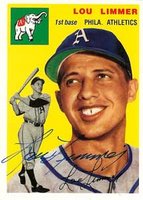
Lou Limmer was 82 when he died on April 1st in Boca Raton. A Jewish first baseman from the Bronx, Limmer saw limited playing time in two seasons with the Philadelphia A's. But that cup of coffee was enough to make him a part of baseball history. Batting for the A's in 1951 against the Tigers, he was part of the only all-Jewish pitcher/catcher/batter at-bat ever recorded in a major league game. Saul Rogovin was on the mound for the Tigers and Joe Ginsberg was behind the plate.
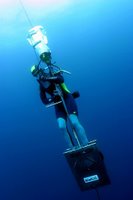
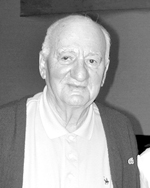


Frenchman Loïc Leferme was a pioneer in the sport of free diving, underwater diving without an oxygen tank. He twice set world records, most recently in October of 2004, when he submerged to 171 meters below the sea without breathing apparatus of any kind. Thirty-six years old, he drowned on April 11th while training for another shot at the world record.

Alvin Roth was the "Babe Ruth of bridge," quite possibly the best player of all time. Ninety-two when he died on April 18th, he had won 26 national championships with 11 different partners, although his best-known partner was another bridge legend, Tobias Stone. Together with Stone, Roth played a famous game of bridge with Dwight Eisenhower while serving in the Army in WWII.
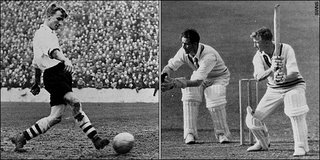


Arthur Milton died on April 25 at the age of 79. Having played 6 test matches for the English cricket team in 1958-59, and a match with the English national football team against Austria in 1951, Milton was the last surviving man of twelve in history to have represented the Jolly Old at the highest level in both of those sports.
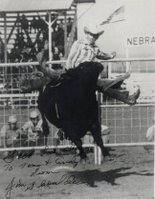
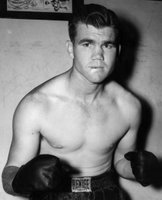


Simply put, Jim Shoulders was the greatest rodeo rider who ever lived. Over the course of two decades he won 16 world championships and five all-around Pro Rodeo Cowboy Association championships. In his prime in the 1950's, he was all but unbeatable. He's also the only professional cowboy honored in the Madison Square Garden Hall of Fame. He was 79 when he died on June 20th at his home in Henryetta, Oklahoma.

Pete Mead, who died on July 2nd at the age of 83, was a middleweight journeyman who fought several times at the old Garden in 50's. He faced such notables of the time as Fritzie Zivic and Randy Turpin, and in his last bout he was knocked out in the third by Rocky Graziano. His fight with Joey DeJohn at the Garden in 1949 was a Gatti-Ward bloodfest of its day - Ring magazine once called it one of the ten greatest fights ever. Mead wrote an autobiography in 1989 called Blood, Sweat and Cheers that is now out of print and highly sought after by collectors. If you have a copy, we'd love to hear about it.


Gato del Sol was one of the biggest longshots ever to win the Kentucky Derby, winning the Run for the Roses by two and a half lengths in 1982 at 21-1 odds. He was euthanized on August 7th at the age of 28.

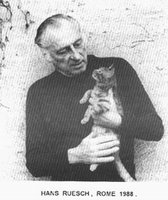
A true renaissance man of the 20th century, Switzerland's Hans Ruesch first achieved fame as a race-car driver in the 1930's, winning 27 races in his career including the 1936 British Grand Prix. By the 1940's, he had moved to the U.S. and was writing popular fiction in English, including two best-selling novels, The Racer and Top of the World, the latter of which would be made into a film by Nicholas Ray. Amazingly, Ruesch's life had a third act, as he became one of the best-known animal rights activists in the world in the 1970's, founding The Center for Scientific Information on Vivisection and writing a very influential book, The Slaughter of the Innocents, in 1978. He died on August 27th at the age of 94 in Lugano, Switzerland.
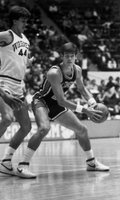


Former Clemson basketball star Clarke Bynum succumbed to cancer on September 3rd at the age of 45. Bynum was a stalwart forward with the Tigers in his four years at Clemson, but he is most well known around the world for his heroics in December of 2000, when he helped subdue a Kenyan hijacker who attacked the pilot of a British Airways jet en route to Nairobi.

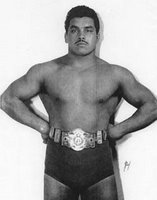
Enrique Torres was one of three Mexican-American brothers who were popular pro wrestlers in the 40's and 50's. Extremely agile and known for his drop-kicks, Enrique never took an alias, though he was known in the press as the "Latin Flash." He won the California world heavyweight championship in 1946, but lost the belt the following year to wrestling legend, Gorgeous George. Torres died in Calgary on September 10th at the age of 85.
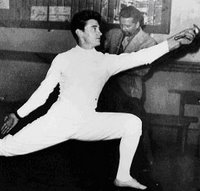


The owner of six Olympic medals, four of them gold, Christian D'Oriola of France was named the Fencer of the Century by the international fencing federation in 2001, stating that "Christian d’Oriola was fencing perfection personified as no-one else has ever been…" He died at the age of 79 on October 29th.

Austrian Ellen Müller-Preis won three Olympic medals in fencing, including a gold in individual foil at the 1932 Games in Los Angeles. She competed in every Olympics from 1932 to the 1956 Melbourne Games, when she was 44 years old. She was 95 when she died on November 18th.
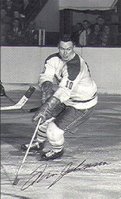


A stalwart defenseman, Tom Johnson played 15 years for the Montreal Canadiens in the 1940's and 50's, winning six Stanley Cups and a Norris Trophy with the team during that span. He also coached the Bruins to their last Stanley Cup victory in 1972, two years after he was inducted into the Hockey Hall of Fame. Johnson died at the age of 79 on November 21st.

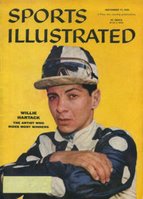
Jockey Bill Hartack won an amazing eight Triple Crown races in his Hall of Fame career, and is one of only two jockeys (with Eddie Arcaro) to win the Kentucky Derby five times. Over the course of his 21 years in horse racing, he rode 4,272 winners, and graced the covers of Sports Illustrated and Time magazine. Seventy-five years old, he died of natural causes on November 26th while on a hunting trip.
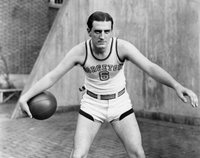


At his death on November 29th, Congressman Henry Hyde had served as a representative from the 6th district of Illinois for nearly 32 years. Over that time, he came to be known as one of the most respected members of the House on both sides of the aisle. Back in his college days at Georgetown, Hyde also was respected on the basketball court as one of the leaders of the Hoyas in their 1943 run to the Final Four. Hyde was 83 years old when he died.

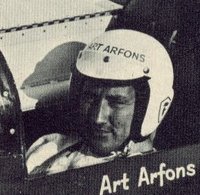
In his famous Green Monster jet-powered cars, Art Arfons held the land speed record three different times from 1960-62. He was eighty-one years old when he died on December 3rd in Springfield, Ohio, and three days after his death he was inducted into the International Motorsports Hall of Fame.
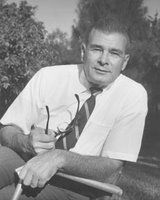
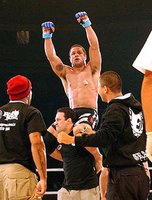


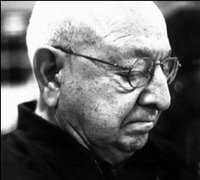
But for Nat Fleischer, there probably was no man who ever lived who knew more about the sweet science than Hank Kaplan. Nicknamed "The Lord of the Ring", Kaplan was one of the sport's foremost journalists and historians, a stature that earned him induction into the International Boxing Hall of Fame in 2006. His credits are too massive even to begin to list - basically, if a publication ever covered boxing anywhere on God's green earth, Kaplan wrote for it. He died of cancer on December 14th at the age of 88.

Ryan Gracie was Brazilian jiu-jitsu royalty, grandson of the great Carlos Gracie and brother of the famous Renzo Gracie. Known as the bad boy of the Gracie clan, Ryan more than lived up to his image, dying of a massive drug overdose in a Rio de Janeiro jail on December 14th. He was 33 years old.

Friday, December 28, 2007

The Many Losses of Large


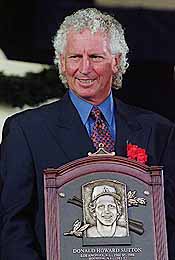
I have to confess that reading the news yesterday that Eddie Sutton is returning to coaching brought only one major thought to my mind - God I hated Don Sutton. I mean, I really HATED the guy.

This led me to think about an argument I once lost, one that still burns me. It was with this gravelly-voiced asshole of a Dodgers-fan bartender at Teddy's in '98, the year that Don Sutton got elected to the Hall. I was sitting there bitching and moaning about Sutton making the Hall and saying how I thought he didn't deserve it, etc., and this mamaluc actually came around the bar with his Baseball Encyclopedia in hand (he was exactly the kind of jerkoff who keeps a Baseball Encyclopedia nearby at all times) to set me straight.

I got slaughtered, the acid-reflux memory of which led me to other such memories of defeat, and in the interest of purging them I thought I would share my ignominy with the No Mas community. So without further ado I bring you The Top Five Baseball Arguments Ever Lost by Large in a Bar. It should tell you something about the list to know that the above Don Sutton donnybrook didn't even make the cut.

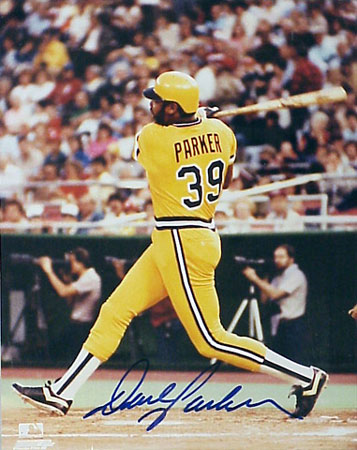
5. Dave Winfield v. Dave Parker
Teddy's - Brooklyn, NY - 1996
Lost this one to a Teddy's bartender as well, and again it wasn't a throwdown I was looking for exactly - I was just there at the bar mouthing off and the next thing I knew I was getting taken to the mat. I was on the Winfield side of things, and in retrospect I still think I'm right about that on the whole. Then again, as we all know, bar arguments have nothing to do with being right. It's a lot like a bar fight really - the timing and force of your first punch is nearly everything. In this case, I just happened to be up against a Pirates nut who was loaded for bear and came out throwing bombs. Later on, when the argument was mostly over and I was all bitter I tried tweaking the guy about the overall crap-liciousness of the Pirates as a franchise and he started talking about how historically they could field the second best team in the bigs next to the Yanks, and I was like bullshit no way, and the next thing I knew he's hitting me with "Paul Waner." I mean, when you're in a bar baseball argument and your opponent busts out a name like "Paul Waner" without even giving it a second thought, you know you're about to drink an ice-cold can of asswhup.

4. Rod Carew v. Don Mattingly
Trump Plaza - Atlantic City, NJ - 2002
This is the only one of these arguments that I could nail down to a specific date, because it was the night of the Lennox/Tyson bout. I was down at my folks' place in Brigantine and I went over to AC to watch the fight on the big screen. Later on, I was eating at the bar and I struck up a conversation with a Yankee fan who was going on about how Mattingly belonged in the Hall, a point that I took issue with. He said something like, "name some first basemen who've gotten in the Hall lately," and admittedly there had been some weak ones right around that time - Tony Perez, Orlando Cepeda - but then I hit on Carew (inducted a decade earlier, and perhaps more a second baseman than a first, but still...), which really set him off. "You're gonna compare Rod Carew with Don Mattingly?" We went back and forth for a while, and of all the arguments listed here, this undoubtedly was the best contest, which is the reason I include it in the top five. And though I do feel like I lost in the end (again, another one where I feel like I was completely in the right, but just didn't execute), unlike so many bouts of bar-blathering, it was one of those sound competitions that ennobles rather than degrades the participants.

3. 1980 Phils v. 1998 Yanks
The Harvard Club - Manhattan, NY - 2003?

I'm a little iffy about the date on this one, but it was sometime in the early part of the millennium when I used to meet my friend Ed at the Harvard Club to play squash. Then we would eat dinner and watch baseball games at the bar. I'm just ashamed of this thing all around - in retrospect I was just ridiculously wrong and in the moment I lost a humiliatingly quick exchange when I thought I was going to sound all erudite and creative and ended up sounding like some out-of-town mook who probably had a hard time tying his shoes that morning. And let me tell you something people - that shit will happen to you in the Harvard Club. Best to keep your mouth shut up in that motherfucker unless you got the nuts.

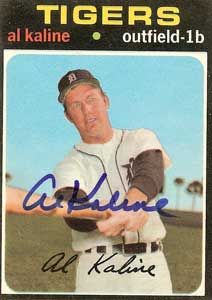
2. Al Kaline v. Al Kaline
The Brooklyn Nights - Brooklyn, NY - 1994
Oh my brothers and sisters this is a bad one. I don't really remember much of what transpired but I am told that I ardently defended the honor of Al Kaline against a professional wrestling sized ringer from Detroit who evidently thought that Kaline was overrated, but who also (I'm told) didn't give much of a shit either way. It's funny really, because I hardly know the first thing about Al Kaline other than that he played for the Tigers and he had 3,007 hits (I pretty much had the 3,000 hits club memorized when I was a kid). I never saw him play and I have absolutely no strong feelings about the man or his game, but on this night, fueled by alcohol and youth, I was passionate on the matter. This one, I'm sorry to say, turned into a fistfight, which I also lost, lost it badly. Al Kaline, wherever you are, I want you to know that I went to the mat for you sir, was prepared to give my life for the cause of your honor, and to this day I have no idea why. Someday perhaps you will return the favor.

1. Joe Carter's Walkoff v. The Heartbreak of an Entire Borough
Turkey's Nest - Brooklyn, NY - 1995
I want to begin by pointing out that this is back when the Turkey's Nest was a dive, and not a "dive." This one right here is no doubt the most efficient KO I've ever swallowed in my career of arguing about baseball in bars, and I have to say it was the most satisfying too, sort of like getting knocked out by Joe Louis or Rocky Graziano, a piece of history you're proud to be a part of even on the losing end. I was in the Nest one night watching a Knicks game and when it was over everyone left and I was solo with the crusty old bartender who had a facial tic and seemed like he was a bit touched on the whole. SportsCenter was on the tube with the sound down and for some reason they showed a highlight of the Joe Carter walkoff in the '93 Series, and I, deep in my cups and melancholy as an Irishman out on bail, said out loud to no one in particular, "that... was the worst thing that ever happened." My barman made straight for me then, stood in front of me with a froth of a look and yelled, "the worst thing that ever happened! the WORST THING that ever happened? THE WORST THING THAT EVER HAPPENED WAS THE DODGERS LEFT BROOKLYN!" Then he poured me a buyback and walked to the other end of the bar, a neutral corner. No need to even count me out. He'd finished me with a single blow.

Thursday, December 27, 2007

There Was Nothing Wrong with That Goolagong

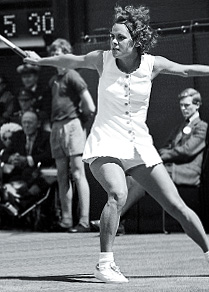
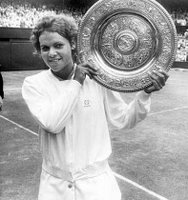
Some strange news from the world of tennis today, as the WTA announced that it would award the number one ranking to Evonne Goolagong Cawley retrospectively for a two-week period in 1976.

This came about due to the recovery some lost records that indicated that Goolagong had overtaken Chris Evert for a fortnight in that long-passed bicentennial summer.

This bit of news brought two thoughts to my mind. The first was... who in the hell is sitting around some godforsaken office somewhere looking for these lost files of the WTA from 1976? Is this a mystery they've been trying to solve for years now? JESUS. I guess you have to admire them in a way. Myself, I have to imagine I might have given up by now on the whole "those mysterious two weeks in the summer of '76" controversy.

After I pondered that, however, I turned to a more pleasant second thought, which of course was of the righteous Miss Goolagong in her prime. I was fascinated with her as a child tennis fan, first and foremost because she had the greatest tennis name that ever there has been. And then she had a countenance that was entirely worthy of her Goolagong-ness - she played with laconic grace, her skin was bronze and her legs eternal, and she always had a mysteriously detached air about her on the court, as if she were there and yet not really there at all. Yet she played ferociously in big moments, despite frequently, as Bud Collins used to put it, going on "walkabout" in her matches.

It was only later that I realized the implications of this characterization of Goolagong, implications that perhaps do not reflect all that well on crazy ole Bud. Only later, too, did I realize that I was witnessing real history as I watched her in the 70's, because I was watching the Althea Gibson of Down Under, the first Australian aboriginal to win a Grand Slam title and the first to achieve worldwide fame as an athlete. Throughout her climb to the top, she battled racism of the kind that would be all too familiar to African Americans in the States, and was only permitted onto a tennis court in the first place because a white local noticed her peering through the fence at a world and a sport from which she was excluded at the time due to her aboriginal status.

She won seven women's Grand Slam singles crowns, and was a Grand Slam runner-up an amazing 11 times. Behind Margaret Court, Billie Jean and Chrissie, she was the fourth best women's player of the 70's in maybe the most competitive decade the women's game has ever known. But more importantly, she became an icon of liberation and equality for all Australian indigenous people, a fact underscored by the reverence which she has enjoyed there for decades now. For evidence of that, just check out the video below and ask yourself if you've ever heard a song about Chris Evert.

Wednesday, December 26, 2007

"Yes it's true that Jesus happened to be born on Rickey's birthday..."

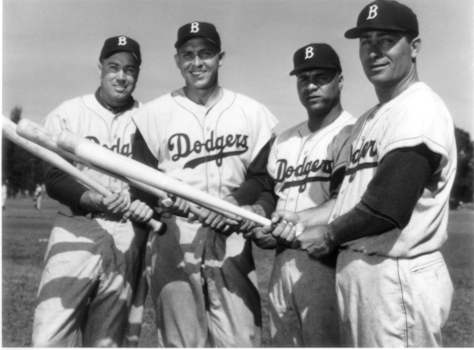
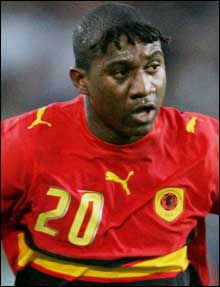
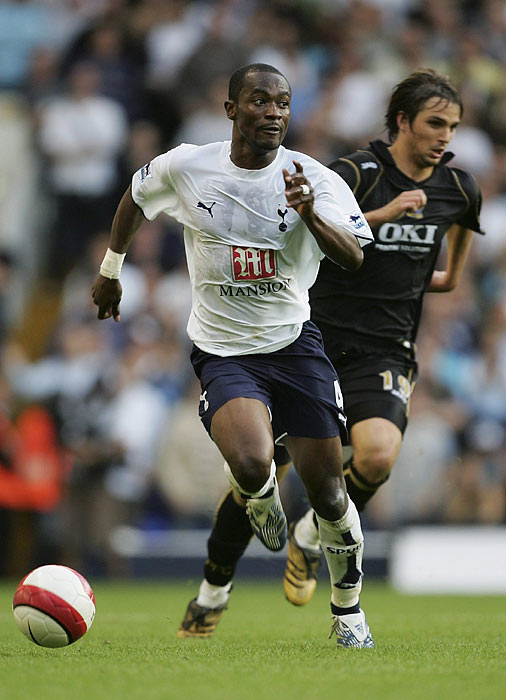
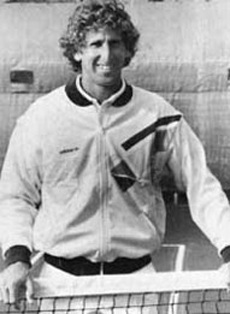
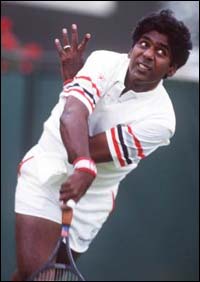
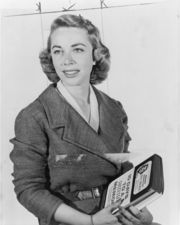
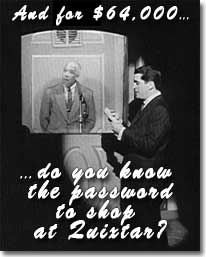
I didn't get to this yesterday, so my apologies to the many athletes who share with Christianity's biggest all-star the distinguished birthday of December 25th. The Xmas/b-day double-trouble pictorial below includes six baseball players (MLB's first 300-game winner, an outfield-mate of Mel Ott, two great second-baggers [one so ill-matic it's hard to even comprehend his ill-ness in human terms), a former Ham fighter turned Beantowner, and baseball's version of Christ if you happen to be The Rooster (although Rickey probably would say that Christ was just Christianity's version of Rickey)], three footballers (a former Scottish captain, an Angolan whose hairstyle is straight-up loco, and a Brazilian who often finished Pele's feeds), two American footballers (a mad Hungarian fish and a very VERY big kid), two cricketers (a bowling pioneer and a burgeoning batsman), one half of America's Most Wanted, a Mesoamerican expert in the much-underrated sport of sorcery, a race-car driver better known for his cars than his racing, an Olympic boxer better known as the father of a tennis champion, and an avid fisherman and sailor better known as a hard-boiled gumshoe, or a hard-living pilot, or a hard-luck owner of a very famous gin joint.


Large at The Sporting Blog

You probably didn't see this over at sportingnews.com, so let me be the first to inform you that I, Large, am officially joining the team at The Sporting Blog. I was hired by Chris Mottram, the manager of the The Sporting Blog who is known to most of you out there in the blogdome as one half of the Mottram brother-team that brings us Mr. Irrelevant.

I have to say, I'm very excited to be writing in any capacity for The Sporting News - it's a very No Masian publication, one that I associate with the childhood mystery of sports at its finest. Me, I think of that magazine and I immediately see it's iconic script in my mind and then I'm about seven years old again. For some reason, Dave Parker springs to my mind.

I haven't figured out exactly what I'm going to be doing over there yet, but to start I imagine I'll keep it pretty No Mas in its orientation - a lot of history in the No Mas vein, a little bit of classic/now, and, of course, fisticuffs galore. Eventually I probably will start doing some kind of material exclusively there and some sort of material exclusively here, and when that breakdown occurs, rest assured that I will let you know. I'll most likely be pimping my Sporting Blog material most egregiously here at No Mas (and vice versa) so, you know, you'll be in the loop.

Sunday, December 23, 2007

One more shopping day left...


NO MAS BOOK REVIEW


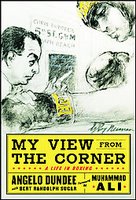
My View from the Corner: A Life in Boxing (2007)
Angelo Dundee with Bert Sugar

McGraw-Hill, 337 p.


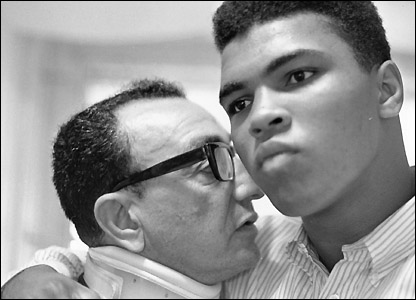
Anyone even remotely connected to the boxing universe knows that Angelo Dundee is one of the nicest guys, if not THE nicest guy, in the business. I met him on the set of Classic Now and approached him meekly just to shake his hand and profess my admiration for his work. He jovially complimented me on my Everlast hoodie and then engaged me in conversation. When I mentioned that I'd recently watched the Clay/Doug Jones fight, he started telling me everything he remembered about the fight, and was about to start in on Leonard/Hearns when his segment was ready to tape. After that, whenever he was on the show I would talk to him, and though he never remembered who I was (and why would he?), he always was as eager to shoot the shit with me as he was the last time we'd met. Once I got his autograph in one of my boxing books, and he signed it, "Dear Dave, thanks for asking," as if the honor was all his.

Even Dundee himself alludes to his legendary niceness in his new memoir, My View From the Corner, mentioning that it was once said of him that if someone started badmouthing Charles Manson in his presence, he probably would say "ah, I don't know, he had some good traits."

What I'm trying to get at here is that I'm conflicted about reviewing Dundee's book, or more, conflicted about badmouthing a book written by a man who wouldn't badmouth Charles Manson.

So I'll guess start with the good stuff. The first 50 pages or so are engrossing, telling the story of Dundee's rise through the trainer's spit-bucket education on the coat-tails of his semi-bigtime promoter of a brother, Chris. Here we get a taste of what feels like the unadulterated reminiscences of Angie, written in a lively prose that genuinely captures the cadences of Dundee's unique speech patterns. These chapters paint an insider's picture of a bygone universe that fascinates me, one that I admit I am inclined to heavily romanticize - Stillman's, the old Garden, Toots Shor's, Blinky Palermo and Frankie Carbo, Whitey Bimstein, Chickie Ferrara, Charlie Goldman. Unquestionably for me, the most compelling passages of the entire book are Dundee's memories of sitting around a table at the Natural or the Garden Cafeteria as a trainer's apprentice listening to the giants of his trade swap stories about their fighters. I could have done with about a hundred more pages of that business.

Sadly, the entry of young Cassius Clay onto the scene (and the disappearance of Willie Pastrano) signals the beginning of the end of the good stuff, a problem that is only partially Dundee's fault. For the story of Clay/Ali is such heavily trod territory to a boxing fan today that once the book turns into a sequential recitation of The Ali Journey, it loses most of its originality and starts to seem like a halfass SportsCentury. Dundee's voice gets obscured as well by that of his ghost-writer Bert Sugar, a problem that plagued the book for me after the opening chapters, as what previously felt like a folksy and intimate conversation with Dundee turns into a Bert Sugar-styled history lesson written in the first person of another man.

This maybe would be forgivable if Dundee's memories added much to the familiar tale that we didn't already know, but there's precious little of that here. Angelo slicing and then removing Clay's "damaged" glove in the Henry Cooper fight to buy his injured fighter some time? Clay's blood pressure going through the roof as he did his crazy routine at the Liston press conference? Angelo shouting down Bundini Brown in Ali's corner to stop the humiliation of the Larry Holmes fight? Take these three anecdotes above as indication of how interesting this book might be to you. If you've never heard these stories before, they are well told here and this thing is probably worth your while. If you have heard them, however, heard them maybe a hundred times, then you're not missing much by taking a pass on My View from the Corner.

After the Trevor Berbick debacle and some kind, banal words on the spirit of Ali, Dundee moves on to his time with Sugar Ray Leonard, a gig that he was less enamored of for sure than his tenure with The Greatest. In fact, in these memories Dundee finds a man evidently more odious than Charles Manson himself, because he goes out of his way to heap scorn upon Leonard's ironically named lawyer, Mike Trainer. Nevertheless, insight-wise, the Sugar Ray chapters are about as bland as the Ali material. In other words, if "you're blowing it son!" is a line that means nothing to you, you're going to hear a few stories you've never heard before, but otherwise you'll be on very familiar ground.

The book finishes with a cursory treatment of Dundee's stint with George Foreman in the 90's, and here I confess I did learn something new - that Angelo started working with Big George only after George disposed of one of Angie's fighters, the long-lost heavyweight contender Adilson Rodrigues. The Foreman stories are a punchy way to end the book and take the story out on a high note, but the brief wrap-up final chapter left a bad taste in my mouth largely because of an anecdote that I have to believe an editor might have caught and taken out of there. In writing of the boxing death of Davey Moore in 1963 (yes, that Davey Moore, the subject of Dylan's boxing protest number, "Who killed Davey Moore why and what's the reason for?"), Dundee claims that it's a double tragedy in his memory, because not only was it his fighter Sugar Ramos who beat Moore to death that night, but also because another one of his fighters, Luis Rodriguez, won a great victory on the undercard that was completely overshadowed by Moore's death. This callous assessment of the situation doesn't sound anything like Angelo Dundee to me, and I can only imagine it's some twisted translation of what actually came out of his mouth on the topic. I hope it gets scratched from future editions.

Otherwise, look, to tell it in Angelo-ese, it is what it is - 50 pages on the good old days, 170 on Ali, about 50 more on Ray Leonard, 30 on Big George and a coda to close it out. Myself, I wanted a lot more insight into the nitty-gritty details of a trainer's profession, and hell of a lot more anecdotes about Dundee's other well-known charges, fighters like Pastrano, who gets short shrift at best, and Carmen Basilio, an all-time great and fascinating figure who inexplicably gets the shaft, about a page and a half total mention.

But hey, we all know it's names like Ali and Sugar Ray that move units, and even given my qualms, as a last-minute gift for the boxing fan on your list, you definitely could do a lot worse than this.

Saturday, December 22, 2007

Allow Him To Re-Introduce His Self

(As promised, we are proud to bring you the return of our prodigal son, The Franchise, once a regular No Mas contributor and now the proprietor of one of the best fight-sport sites on the web, jarrypark.com - a.k.a., The Coliseum of Combat Sports Interviews. Chise joins us today to bring his expertise to bear on the number one issue du jour, Floyd Mayweather and his proposed MMA gambit - L)


"UFC's champions can't handle boxing. That's why they are in UFC. Put one of our guys in UFC and he'd be the champion. Any good fighter, he'd straight knock them out…Take Chuck Liddell, put him in the ring with a (boxer) who is just 10-0 and Chuck Liddell would get punished."

-Floyd Mayweather Jr.
April 2007

To those who follow mixed martial arts, Floyd Mayweather's latest flirtation with the sport is actually old news. Think back to the weeks leading up to De La Hoya-Mayweather. At this point, the boxing vs. MMA debate was the talk of the combat sports world and naturally Money May felt compelled to dress down MMA (while Mayweather mentions the "UFC" in his quote I have to think that he was talking about the sport in general. Contrary to what the UFC says, there are, in fact, other viable MMA organizations out there).

In light of his comments, UFC president Dana White reportedly offered up then-UFC Lightweight Champion (155 lbs), Sean Sherk, to face Mayweather and settle the debate once and for all. I mean, that's why MMA was created in the first place, right? To see which form of combat sports would reign supreme in a given match or tournament. However, for one reason or another, any talk of an MMA vs. Boxing mega-fight quickly died down following Mayweather-DLH (and, no, Kimbo Slice vs. Ray Mercer doesn't count).

Now comes news that Mark Cuban is trying to lure Mayweather to compete for his new MMA promotion - HDNet Fights. ESPN and every other sports news outlet under the sun is buzzing over this rumor but let it be known that it was in an interview with JarryPark.com that Cuban first mentioned his intentions of signing Mayweather to an MMA fight.

Truth be told, I have some mixed feelings about all this. I honestly don't believe that we will ever see Mayweather fight an MMA match anytime soon. Maybe in five years when all his mega boxing fights have been accounted for but, right now, I wouldn't hold my breath. The biggest issue with these discussions is that both sports are actually really different. Just because an athlete runs in a football match and a basketball game doesn't make the sports similar. But I suppose that's a different argument for a different day.

Let's forget about my cynical ways for one second. Let's just say he really is interested in settling this debate once and for all. In order for this fight to be presented properly there are several hurdles to conquer: First off, he will probably have to go up against a featherweight MMA fighter (145 lbs). While White offered Sherk as a potential opponent, I can't see Mayweather fighting at 155 lbs nor could I see Sherk or any other MMA lightweight fighter move down to 145 or 147. Right now, the top 145-pounder in the world is the current World Extreme Cagefighting champion, Urijah Faber. He may also be the best pound-for-pound fighter in the world too. The problem with Faber is that his contract is owned by Zuffa (the parent company of the UFC). Cuban has 30 million dollars to spend on a guy like Mayweather. Zuffa doesn't and it would never lend out one of its fighters to another promotion. Witness the fact that they would rather let Randy Couture sit on the sidelines than co-promote a bout between him and the universally recognized top heavyweight fighter in the world - M-1 Global's Fedor Emelianenko.

The next problem is that the WEC is home to most of the top featherweight fighters in North America (Jens Pulver and Jeff Curran come to mind) so if Mayweather really wants to prove himself against the best, well, he is barking up the wrong tree by dealing with Cuban.

That said, they don't call him Money May for nothing. If Cuban is really interested in signing him for 30 million dollars he could challenge a top Japanese fighter like Akitoshi Tamura or Takeshi Inoue. It would be like Inoki-Ali all over again! On second thought, maybe we would rather not see that again.

Anyhow, for the sake of this discussion, let's just say Mayweather and Faber end up fighting each other. For Mayweather's debut to truly mean something to MMA fans Faber needs to be the one representing the sport. The California Kid is almost as cocky as Pretty Boy Floyd (almost), holds an impressive record of 20-1 and is currently enjoying a 12-fight winning streak.

But here comes Mayweather's next hurdle: Faber is a former Division 1 college wrestler, the all-time wins leader for UC Davis (how's that for a coincidence Mr. Large?) and a two-time NCAA D-1 qualifier. Simply put, the man can wrestle. Mayweather, on the other hand, can't.

So, the fight begins. Mayweather is dancing around feeling his opponent out and looking to work in his jab and then...BAM! Faber shoots on him and takes him to the ground. Unchartered territory for the boxing champ, indeed. MMA purists love to point out that you can always teach a wrestler how to box but it's a lot tougher to teach a boxer how to wrestle. They just aren't used to it. Furthermore, a former wrestling champion like Brock Lesnar will probably make a smooth transition into MMA (his UFC debut is on 2/2/08, by the way) because his wrestling skills will lead to a better understanding of jiu jitsu which is the foundation of MMA. You see, Faber's wrestling skills will only take him so far in an MMA match. Once he is on the ground he then goes into jiu jitsu mode. He can look for the ground-and-pound or a whole host of different submissions. How in the world is Mayweather going to defend this? Does he know how to fight off his back? Does he know how fight off an arm-bar submission or a rear-naked choke? Of course not, although he could certainly learn.

And that's where the next and final hurdle comes in. For Mayweather to successfully compete in MMA he needs to learn at least two (maybe three) fighting disciplines. Learn them. From scratch. We'll give him a pass on kickboxing but there is no way he can enjoy the kind of success he is used to in an MMA cage without mastering the art of wrestling and jiu jitsu. Faber has been at this for several years now. He's also been honing his boxing skills since making the transition from wrestling to MMA. This could be one of his easier fights ever.

Mayweather has been actively competing in professional boxing for over eleven years. As witnessed in 24/7, his body has experienced its fair share of bumps and bruises. Is he even able (or willing) to learn two new fighting disciplines at this stage of his career? That remains to be seen.

Floyd, you won't be fooling anyone by taking a fight against another boxer turned MMA fighter where they never go to the ground once yet are competing inside a cage. That's not MMA. If you really wants to excel in your new-found "interest" go away for 18 months - at least. Learn jiu jitsu, learn how to wrestle and while your at it learn how to throw some kicks. Then we can talk. Until then, shut up and fight Cotto already.

The Final Frontier

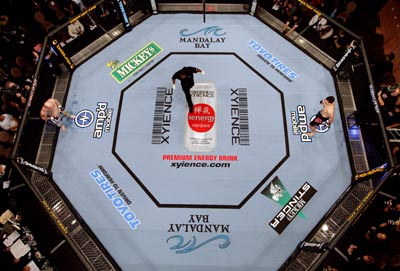
No Masians, I ask you, what are your thoughts about Floyd Mayweather's potential jump into the octagon? It's a revolutionary concept, and certainly ironic that the news was floated to the media on the very same day that we crowned him as The No Mas Fighter of the Year.

As for myself, I will offer just a few thoughts. I like MMA and consider the growth of the sport to be good for boxing - I've always thought the pissing-contest debates about the octagon versus the squared circle were just so much keyboard-tapping and gum-flapping. I don't follow MMA with any regularity and I admit that when I do watch it, my enjoyment does not begin to approach my enjoyment of a good boxing match. But I'm not sure that fact is even relevant - I don't enjoy most movies as much as I do a good boxing match either, but I still go to the movies. A good MMA fight is an awesome sight and I have no doubts that the sport is here to stay and only will continue to grow in leaps and bounds until it is a money-making enterprise to rival and even surpass boxing. To that end, as most of you remember, I was very invested in having regular coverage of it here on No Mas, and all-too-briefly that was the case with our crack correspondent, The Franchise. Chise, however, now has his own site, jarrypark.com, devoted to the combat arts of all stripes, a site that is pretty quickly getting a lot of attention as one of the best fonts of MMA and wrestling information on the web, not to mention a place where one can hear one Mr. Large flap his gums on a regular basis.

Basically, though I am far too much of a dilettante to call myself a fan, I am definitely an MMA supporter, and so, unlike many boxing purists I suspect, I have no problem with the idea of Floyd making the jump to the octagon. In fact, it makes perfect sense to me. The only thing that bothers me about it is that there's one more huge fight left for Floyd in the ring, and as far as I'm concerned, after he takes that bout he can go out on the pro arm-wrestling circuit for all I care. But RIGHT NOW is the time for Mayweather/Cotto, while Floyd is still reasonably close to his prime and Cotto is at his best. That is the most perfect "styles make fights" match-up of undefeateds that I can think of since, Christ, since Meldrick fought Chavez. I have no reservation in saying that it would be this generation's Ali-Frazier, and as a boxing fan I literally salivate at the prospect.

And yet I fear it is never going to happen, or if it does, it will happen in three years, when the skills have deteriorated and the excuses are rampant and we are all left to watch and wonder what might have been if only it had gone down when it should have gone down. Of course, Floyd's rationale for ducking the fight is clear to me and anyone paying attention. Cotto is a punishing fighter of great skill and force who does not have anywhere near the drawing power of Floyd's previous two opponents. It won't be the marquee mega-event that he has become accustomed to, and he very well might lose.

A jump to MMA, on the other hand, is almost guaranteed to be a stratospheric spectacle. Cuban evidently is talking 30 mill cash money for Floyd's MMA debut, and if indeed Money's just got money on his mind, well, get ready octagon, cause here comes Money May.

But beyond the interminable Onslaught of Bling, there has been another recurrent strain to Floyd's self-promotional hype machine over the last few years, and that is a desire to claim for himself the mantle of the greatest boxer ever. It's a preposterous boast, something that is unachievable really to a fighter in this day and age when one considers the accomplishment of, say, a Sugar Ray Robinson (let alone a Kid Gavilan). But nevertheless, I want you to listen to me Floyd, because you need to get this straight right now while you are weighing your various options. If your place in the history of the sweet science occupies even a tiny part of your diamond-encrusted mind, you should be persuaded in no uncertain terms of a single, undeniable fact: There is a boxer on the scene right now who is undefeated, who has a legitimate claim to the welterweight crown, and who will give you the fight of your life, a fight that will make your Ricky Hatton square dance look like the glorified sparring session that we both know it was. In short, if you duck this fight, Floyd, true boxing fans will know exactly why you did it - you were afraid to get hurt, and you were afraid to lose. It's your prerogative, of course, but it's not exactly the path to all-time greatness.

(p.s. - For all of you Franchise fans out there, I just received news from him that No Mas should be receiving his thoughts on the Floyd/Octagon question before the day is out. Stay tuned...)

Friday, December 21, 2007

The People Have Spoken

First, let me say that No Mas Nation did an excellent job of weighing the debates for the 2007 No Mas Fight and Fighter of the Year. There were a lot of thought-provoking comments and I got a slew of well-written and passionate emails. We sorted through all of the evidence last night and after crunching and re-crunching the numbers, arguing and re-arguing the merits, we arrived at the winners. The envelopes please...
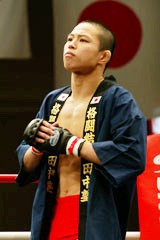


No Mas Fighter of the Year
Floyd Mayweather


This one surprised me. As I said in a comment, I thought for sure this debate would break down as Cotto v. Pavlik and instead No Masians almost universally saw it as Mayweather v. Pavlik. I actually thought Cotto might prevail amongst the No Mas faithful, because he was a happy medium between what I see as the primary FOY qualifications - enormity of fights, and distance traveled career-wise over the course of the year.

But our readers for the most part felt that Cotto's achievement, and Pavlik's as well, paled in comparison to what Floyd did in 2007, not only for himself but for the entire sport. An anonymous commenter made a convincing argument on this front, writing:

Pavlik was the breakthrough fighter and he deserves that honor, but Floyd was the fighter of the year. I mean, just think about it this way. Twenty years from now This will be Floyd's year. The biggest fight in history, and the biggest non-heavyweight, non-oscar fight in history.

An email I received from Walt also made a strong case, saying "in the future this year will be remembered as the year that boxing did a complete 180, and without Floyd that never would have happened - Pavlik beating an overrated Jermain is just not a comparable achievement."

As I read these arguments, I found myself agreeing with them. Over in the Jarry Park awards with Franchise I gave the nod to Pavlik, but that was before the Floyd/Hatton bout, and there's no doubt that Floyd's performance in that fight and then the numbers that it did made a compelling case for Floyd as the king of the sport in '07. He won the two biggest events of the year after helping to make them into such big events in the first place. And those events almost by themselves changed boxing's profile in the mainstream media. It is indeed a mammoth achievement for a single fighter, and for that, I hand him the gold statue for No Mas Fighter of the Year without reservation.


No Mas Fight of the Year
Kelly Pavlik v. Jermain Taylor


There was less debate on Fight of the Year than there was for Fighter of the Year in the No Mas spectrum. While there were a few pleas for Oscar/Floyd, and a worthy write-in from Unsilent for the Katsidis/Amonsot bloodfest, the battle pretty much shaped up cleanly as Vasquez/Marquez II v. Pavlik/Taylor. And Pavlik/Taylor was the overwhelming favorite. Charles put his argument very succinctly - "A classic fight for a classic belt featuring a classic comeback." Exactly.

It definitely helped this fight's FOY case in my mind that the recognized middleweight championship was at stake, and that it turned out to be a battle worthy of the great lineage of 160 title fights - Graziano/Zale, Robinson/LaMotta, Hagler/Hearns et al. In the Jarry Park awards I went with Vasquez/Marquez, but in retrospect I realize that was because I knew I was giving Fighter of the Year to Pavlik, and I wanted to throw some love on that amazing super-bantamweight throwdown. Here, however, I am more than happy to hand the statue to Pavlik/Taylor. As you probably know, both I-berg and I were at the fight, and it was one of the most exciting sporting events either of us have ever attended. For the magnitude of the event, the Rocky atmosphere in the arena, and the sheer guts and improbability of Pavlik's comeback, it is a most worthy selection as the 2007 No Mas Fight of the Year.

Thursday, December 20, 2007

The Sports Guy Now Does NOT Think Boxing Is Dead

I'm not sure that I'm content to allow Bill Simmons to jump on the boxing bandwagon right now, even though I took considerable pleasure from his latest piece in The Magazine about his trip to the Mayweather/Hatton fight. To summarize said piece - he had a smashing good time of it at the big bout in Vegas and now thinks boxing is back and so let's all hug it out.

Ardent No Masians no doubt will recall that our very distinguished guest Unsilent laid into the Worldwide Leader in September for their systematic burial of boxing, and also that I took serious issue with the Sports Guy back in April when he wrote this piece about the Oscar/Floyd showdown, calling it in no uncertain terms "The Last Big Fight" and on the whole proclaiming the sweet science a crumbling edifice in need of condemnation. And I quote:

The sport resembles a broken-down mansion that seems as if it can be salvaged -- right until the housing inspector tells you about the water-damaged walls and termite-infested foundation rotted to the core.

Contrast that with his latest pronouncement - "Boxing ain't dead, at least not yet."

But all right, all right, enough of my smug Simmons-bashing. I will just say one more thing to you, Sports Guy, should you happen to be reading this in your Sports Penthouse Made of Diamonds - promise us true fight fans that you will not write another "boxing is dead" piece for at least five years. You owe us that much, and if you stick to the deal, we'll welcome you back into the fistic family with open arms. Clearly you are a fan in your heart of hearts, and this Floyd/Hatton piece you've written perfectly illustrates in its boundless, giddy enthusiasm what to me is the central point to be made about the sport on the whole: It's unpredictable, cyclical, and plagued by vultures, yes... but the fact remains that there is nothing, NOTHING, in all of sports as electrifying as a big fight that delivers on its promise. In a world where we are bombarded with competition and relentless analysis of that competition on a daily basis, where something seemingly goes into overtime every hour on the hour, the vagaries of that electricity strike me even more as something to be celebrated and not disdained. Dilettantes and posers are quick to note a drought and solemnly announce to the world that it will never rain again. But the true believer stays alert, watching for lightning, which, as we all know, strikes when it strikes. That's why they call it lightning motherfucker.

To the Manner Born

Great group of birthdays today, just a great group - four baseball players (a burgeoning icon in Flushing, a man known primarily for the size of his boner, the home run king of the worst franchise in professional sports, and a charter member of both the Large and the Lambchop Hall of Fame), four football players (a Lion in the Hall, a most unlikely MVP, and two Cowboys legends later jailed for drugs), two musicians (the bassist on the Jackass theme and the drummer on "Detroit Rock City"), an Indomitable Lion, one of the greatest bowlers of all time, one of the greatest, and most sportswomanly, tennis players of all time, a Belgian cycling legend, an uncommonly tall race-car driver, and the executive who helped change the course of the 20th century.


Wednesday, December 19, 2007

Five for Fighting


Ricky Hatton's dad, Ray, has told BBC sport that his son will fight five times in the next two years, twice next year and then three times in 2009. He also says definitively that Junior "The Hitter" Witter will not be Ricky's next opponent. For those of you unaware of Junior Witter, he is a British 140 out of Yorkshire who currently holds the WBC light-welter belt. He's a bit past his best, as they say in the Jolly Old, and he's been angling for an all-England showdown (read: stupid freaky money) with Sir Fatton for years now. For his part, Ricky never has seemed much interested in giving him the time of day, and I must say, I see his point, because I'm not all that bloody well convinced that the 'it Man can 'andle the 'itter.

Junior recently said that he would gladly let Hatton take the lion's share of the money in order to get the fight made, and there no doubt would be a lot of money for this bout in England. But money is clearly not the issue here, especially not after Ricky's big payday with Money May. No, the issue is this - Witter would be a difficult opponent for Hatton, and if, on the heels of his Floyd humiliation, he were to then lose to a fellow Brit who's been calling him yellow for years, well, suddenly the Mancunian masses might turn their attention back to football and the dole. And where would that leave Ricky? Back in the pub, innit. Darts and chips, darts and chips. Fancy a pint? No indeed, I have no doubt that Hatton's next victim will be exactly that - a victim. One wonders if Carlos Maussa is available for a rematch.

Tuesday, December 18, 2007

No Mas Fighter of the Year - The Candidates

Not surprisingly, three of our candidates for No Mas Fighter of the Year participated in three of the four bouts that are candidates for No Mas Fight of the Year. The nominees are listed below in alphabetical order:

Miguel Cotto
3/3 - TKO 11, Oktay Urkal
6/9 - TKO 11, Zab Judah
11/10 - UD, Shane Mosley

Man, it is a testament to the kind of year we had in boxing that there is even a legitimate discussion about Fighter of the Year given the 2007 that Cotto had. A tune-up dismissal of the rugged Urkal (no tomato, Oktay, not by a longshot), and then back-to-back fights with the two most ballyhooed speed merchants in the sport not named Floyd. The Zab fight is a serious FOY contender, and the Sugar Shane fight fell just short. And let me just say this about Cotto/Mosley - it was contested at about as high a level of boxing, in terms of speed, skill and power, that I have seen since De La Hoya/Mosley I. Cotto's 2007 put him right on the precipice of stratospheric super-stardom - all he needs to get over the hump is the magic summons from Money May.

Juan Diaz
4/28 - RTD 8, Acelino Freitas

10/13 - TKO 9, Julia Diaz


Look, a Baby Bull! I inclued Diaz on the list just to give him the honor of being nominated. The fighters he's up against had such gigundous years that it's hard to see him walking away with the gold statue. Nevertheless, 2007 was the year that the Baby Bull's star was born, and that's a star that could burn brightly for a long, long time. I like to measure Fighter of the Year not just by a fighter's great bouts, but also by looking at where he started the year and where he finished it. On that score, Juan Diaz had a stupendous 2007, going from a question mark, a sideshow volume fighter, to a major attraction with three belts in his pocket and a legitimate claim as the best lightweight in the world. His next fight has not yet been made, but one has to imagine that 2008 will see him head into the PPV money. For myself, I'd much rather see Manny Pacquiao fight the Baby Bull than either Oscar or David Diaz.

Floyd Mayweather Jr.
5/5 - SD, Oscar De La Hoya

12/7 - TKO 10, Ricky Hatton


Any other year and you would have to give Floyd the Fighter of the Year award without even thinking twice about it. He moved into elite territory in 2007, territory occupied by only a select few in the 20 years (Oscar, Tyson, Evander, Chavez), that realm of mega-stardom where every one of his bouts is an event. The Oscar fight singlehandedly brought boxing back into the spotlight. 24/7 was a big part of that, and you could argue that were it not for Floyd's Money May persona (whatever you may think of it), those shows would have been pretty dull viewing. So he saves the sport, wears the most ill sombrero in the history of stone cold gangstas, handles a charging Oscar in the boxing event of the millennium and then finishes off the year by finishing off Ricky Hatton in a maestro performance. So what exactly does a man have to do to win Fighter of the Year anyway? Unfortunately, I'm afraid all of that, massive as it was, just wasn't quite enough for Mr. Cash Money in 2007, but I'll say this right now - he beats Cotto next year, he doesn't have to do another damn thing to be FOY in 2008.

Kelly Pavlik
1/27 - KO 8, Jose Zertuche

5/19 - TKO 7, Edison Miranda

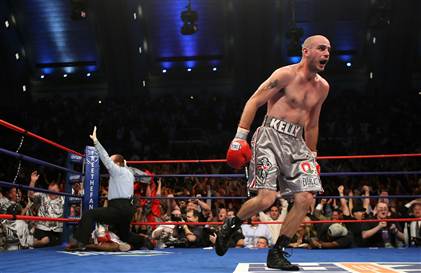
9/29 - TKO 7, Jermaine Taylor


Look, let's cut to the chase here. Floyd's magnificent KO of Hatton clouded the picture ever so slightly, but the fact remains that this is essentially a two-man race - Pavlik and Cotto, Cotto and Pavlik. Each fought three times in 2007 and had two brilliant, career-defining performances. Each has a very sound Fighter of the Year argument. In Pavlik's case it is the distance traveled, from the undercard of a Jorge Arce fight in January to recognized middleweight champion and PPV headliner. In Cotto's case it is the quality of competition. Pavlik may have been the underdog in his fights with Miranda and Jermaine, but in my eyes both of those guys were highly overrated and ready to be exposed. Cotto, meanwhile, beat Zab and then Shane Mosley, an astounding accomplishment in back-to-back fights. It's tough people - I'm very curious to hear how the No Mas faithful come down on this one. Send in your comments and emails and we will weigh the arguments with great care. And if you want your voice to be counted, do it soon - the No Mas Fight and Fighter of the Year will be announced this Friday.
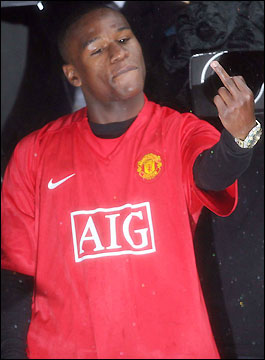
Monday, December 17, 2007

No Mas Fight of the Year: The Candidates


Here it is folks, the round-up for the official No Mas Fight of the Year. As always, if you want to contribute a write-in, that's fine, but the candidates below are the main players in the sweepstakes as of right now. We will take into consideration all comments and emails and announce the winners on Friday (Fighter of the Year candidates go up tomorrow):
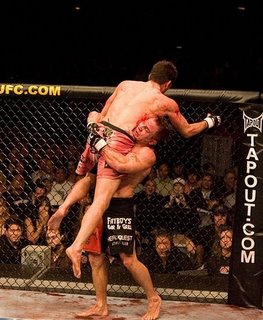
Kelly Pavlik - TKO 7 - Jermaine Taylor (9/29)
I think I said everything I have to say about this fight in this post. Its merits as an FOY candidate are clear - it was a fight for the recognized middleweight championship, it involved an early near-knockout and a desperate race to survive, and in true FOY fashion, it saw the hunted come back to become the hunter, as the wounded Pavlik stalked Jermaine down for the 7th round stoppage.


Israel Vasquez - TKO 6 - Rafael Marquez
(8/4)
Vasquez lost his WBC super-bantamweight belt (122) to Marquez in a fight in March, a fight that was on its way to becoming a FOY candidate before Vasquez was forced to retire on his stool before the 7th due to a nasal injury that was making it impossible for him to breathe. This set up the rematch in August, which was one of those rock 'em-sock 'em robot affairs that simply defies description. The rubber match is already made for March 1st of next year, which makes Vasquez/Marquez an early candidate for 2008 FOY as well.


Miguel Cotto - TKO 11 - Zab Judah
(6/9)
One could argue that Cotto/Mosley belongs on this list of candidates as well, but right now I feel like the way that fight ended, with Cotto in retreat mode and Shane unable to make up an early deficit, left the bout maybe two stellar rounds short of FOY territory. Cotto/Judah, however, was FOY material from the first bell to the last, as Judah gave one of the most spirited performances of his career and forced Cotto to reach deep for the stoppage.


Floyd Mayweather - SD 12 - Oscar De La Hoya
(5/5)
I know the inclusion of this one will raise some eyebrows, but hear me out. For most of this millennium, whenever boxing has been written about in the mainstream sports media, there's been one recurrent thesis statement - "this dying sport is a joke." Oscar/Floyd singlehandedly turned the tide, setting up a second half of 2007 in boxing unlike any we've seen in years. It catapulted Money May into the stratosphere (for more evidence of that, check this out) and inaugurated HBO's 24/7 enterprise, which in and of itself can take a large share of the credit for boxing's renaissance. There's no doubt that based solely on what happened in the ring, this was not a FOY-type of outing for either fighter, but in that there's no EOY (Event of the Year) category, I think the overall import of this bout earns it at least a Fight of the Year nomination.

Sunday, December 16, 2007

Roth, Plimp and the Mighty Mongoose


NO MAS BOOK REVIEW


Exit Ghost (2007)

Philip Roth

Houghton Mifflin, 292p.


I'm going to leave the serious literary questions to the serious litterati. They can hash it out amongst themselves as to whether this is indeed the last visit we'll ever get from Roth's fictional alter-ego, Nathan Zuckerman, or whether the play for voices within Exit Ghost is fantasy or reality, or whether the fictional writer E.I. Lonoff who shows up again in this novel (after last appearing in The Ghost Writer, Roth's novel of 1979) is more modeled on Bernard Malamud (as previously had been thought) or Henry Roth.

For the purposes of No Mas, there is only one question to be asked and answered in regards to this novel, and it focuses on a passage from page 244 of the hardback edition, a little tidbit dropped into the midst of Roth's (Zuckerman's) surprising eulogy for George Plimpton:

...I was there at Stillman's seedy Eighth Avenue gym to marvel at his courage on that afternoon he dared to go the three short, vigorous rounds with boxing's then light-heavyweight champion of the world, Archie Moore, a bout that left him with a broken, bloodied nose and the material for an account in Sports Illustrated...

I tell you people, I could not have been more stunned reading the above words than if Zuckerman had announced that he'd witnessed the mythic secret guitar duel that George Harrison and Eric Clapton reportedly had to win the love of Patti Boyd (a.k.a. Layla).

For some background, lest you be unaware of this fact, in 1959 George Plimpton did indeed spar three rounds with Archie Moore at Stillman's in one of his first and still most famous forays into participatory sports journalism. Though the bout was meant as a pure exhibition, one of Plimpton's friends set him up by telling the Mongoose that Plimp was a ringer who was training as hard as he could with designs on embarrassing Moore and creating some publicity for himself. Some friend. Ole Arch took the bait evidently, and broke Plimp's nose with a lightning combination. It bled profusely.

I have been fascinated and influenced by Plimpton (pictured left with Ali) all of my life, and for years this event has been among my all-time top ten "goddamn I wish I had been there" oddball sort of moments (another Plimpton moment lives in that top ten as well, the day that George arranged a meeting between Ali and the poet Marianne Moore). The thought that the young Philip Roth, on his way to becoming the perhaps the most important American novelist of the century, might have been there as well only sweetens the pot considerably.

So... was he? Here we get into the murky relationship between the author and his fictional protagonist. The pages in Exit Ghost where Zuckerman drops his revelation about the Stillman's bout are together one long reminiscence of Plimpton and his indomitable spirit. Zuckerman, who is old and infirm and having problems with his memory, has been living far away from civilization and learned of Plimpton's passing (he died in 2003) a year after it happened. The news shocks him, because it is very hard for Zuckerman to imagine Death felling the spartan Plimp:

George had no more intention of dying than, say, Tom Sawyer: his not-dying was an assumption inseperable from his competitive encounters with the greatest of athletes. I am pitching against the New York Yankees, I am running plays for the Detroit Lions, I am in the ring with Archie Moore in order to report with authority what it is to survive everything that is superior to you and lined up to crush you.

It is hard reading this, as it always is with Roth's Zuckerman novels, not to conflate Roth and Zuckerman into the same voice, no matter how regularly Roth asserts that this is a mistake. Plimpton, in his Paris Review, was the first person to publish Roth (the same turns out to be true of Zuckerman) and one would imagine that the two were intimately acquainted. So it seems entirely possible that Roth was one of the young literary lions that Plimp invited to Stillman's to watch him get bloodied by the Mongoose.

And... so he was! I did a little research and came up with this NPR interview with Roth about the role of Plimpton's death in Exit Ghost, and though he doesn't give a tremendous amount of insight into the afternoon, he does confirm that he was in attendance at the famous fight and laughs about it with just the type of laughter you would imagine one would laugh with had they been there - the laughter that says oh what fun, what a time, what a lark.

So there we are, No Masians, a mystery solved, and some extra panache added to a historical moment that already held heavy mystique for many of us. As for the rest of Exit Ghost, if you're at all interested, I was unmoved. It's maudlin and repetitive and often implausible. For my money, the Plimpton bit was far and away the best in the book, but I guess that's not surprising given my bias.

Friday, December 14, 2007

Born Free

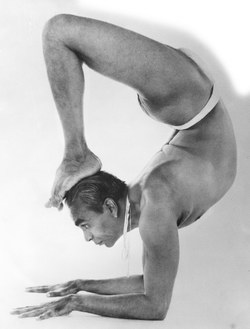
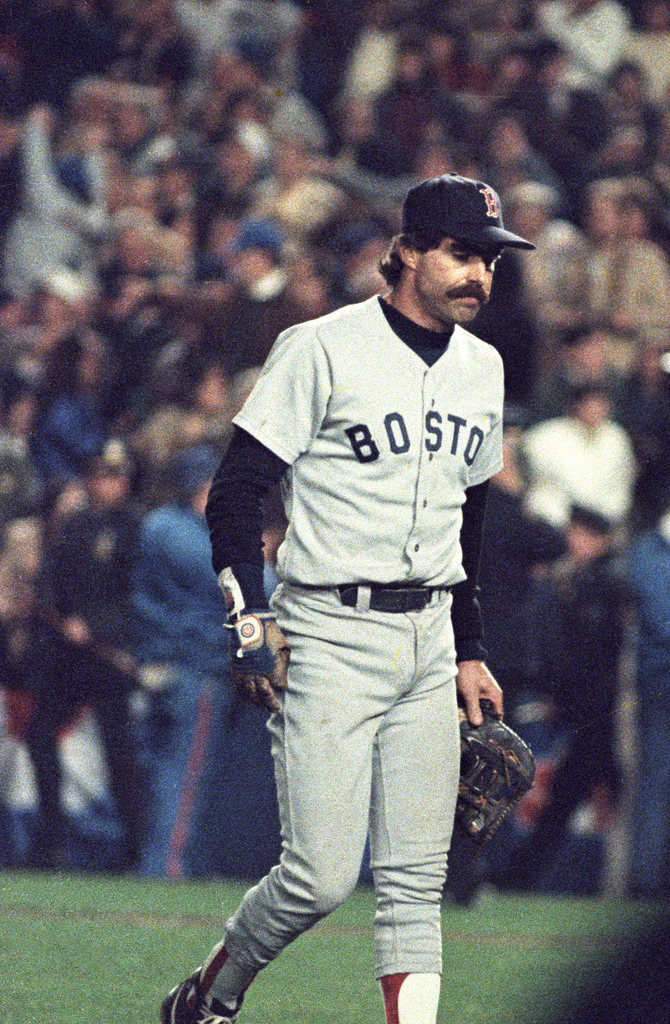
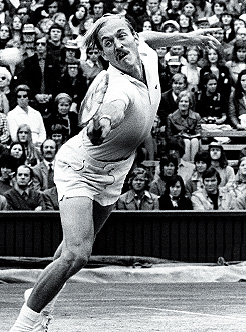
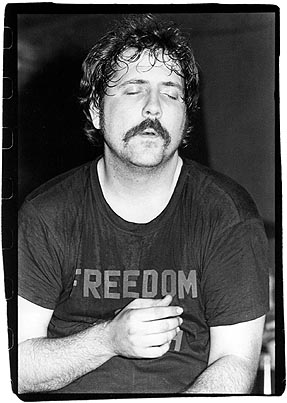
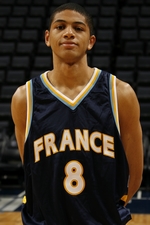
Lot of free spirits in today's birthday round-up, an eclectic group that includes four baseball players (a Killer B, a stalwart of Franchise's great Expos team that wasn't, a man who let a ball go between his legs, and the pitcher in the first all-black battery in MLB history), three footballers (two of the finest to ever suit it up for the "howay the" Magpies, and a Cote d'Ivoirian rock in the midfield), three Olympic medalists (a Canadian diver, German javelinist, and perhaps the greatest athlete ever to hail from Lichtenstein), two tennis players (an American legend known for his eponymous kicks and an Indian star who was known to get his hang on with 007), the first African-American ever to win the Heisman trophy, a pioneering yogi, a young French b-baller who evidently is f'reals, a gay bodybuilding icon, the bassist on some of the most important stadium anthems of our time, and finally, one of Large's favorite writers, and thus a huge influence on sports as No Mas knows it.


Thursday, December 13, 2007

The Manly Art of No Defense

The highest scoring game in the history of the NBA was played on this night 24 years ago, as the Pistons edged the Nuggets 186-184 in triple OT. The combined total of 370 points shattered the previous record of 316 logged by the Knicks and the Philadelphia Warriors on March 2nd, 1962, the night a certain Stilt-licious center went for the century mark over a helpless Knicks' squad surprisingly not coached by Isiah.

And speaking of Isiah... he was unsurprisingly the Pistons' leading scorer in the record-breaking free-for-all with the Nugs, going for 47, although Kiki It's My Way or the Vandeweghe of the Nuggets was the high-scorer in the game with 51. In all, 12 players scored in double digits, including such other "I shoot then you shoot then I shoot again" luminaries as Alex English, John Long and of course, Kelly "Yes I'm a Gay Porn Star" Tripucka. Kelly actually scored all 12 of Detroit's points in the second OT, although to be fair, at that point, on the order of coach Doug Moe (known throughout the land for his "the best offense is absolutely no defense" approach), Denver had given up guarding the Pistons altogether and just sat on the court whenever Detroit got the ball.

In conclusion, I know what you're thinking, and yes, I imagine that the rosters of both of these teams will be cited heavily in today's Mitchell report.

Wednesday, December 12, 2007

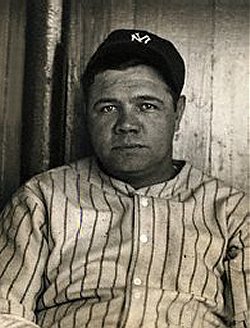
Classic No Mas - Babe Ruth Cheated

(With the Mitchell report about to blow everybody's mind, I thought I would take you back to this very day last year, when the LARGE REPORT blew everybody's mind. December 12, 2006, I blew the cover off one of the most insidious cover-ups the game has ever known, one that implicated its most treasured hero.)


Prior to the 1930 season in the bigs, there were no ground-rule doubles. If the ball bounced out of the park, provided the first bounce was in fair territory, then it was a home run, no questions asked.

So, like... am I the only person in the universe who didn't know about this? My Grampa Noyes taught me everything about baseball and he worshipped Babe Ruth, and he never told me about this. And I'm starting to see why. Just how many of Babe Ruth's home runs were on the bounce anyway? You see where I'm going with this? I mean, forget the steroids controversy. If Bonds hit the majority of his homers on the juice, so what? Freakin Babe Ruth was bouncing them out of parks left and right, so they're even.

The American League adopted the ground-rule double rule before the start of the 1930 season, and the National League followed suit on this day in 1930, making the one (or two... Jesus two) bounce home run gratefully extinct.

The Babe retired in 1935. Of his 714 home runs, he hit 516 of them in the glory days of the old nod-nod-wink-wink bouncy bounce. I say that warrants an asterisk.

Monday, December 10, 2007

The Big House Gang

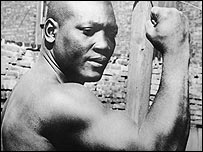
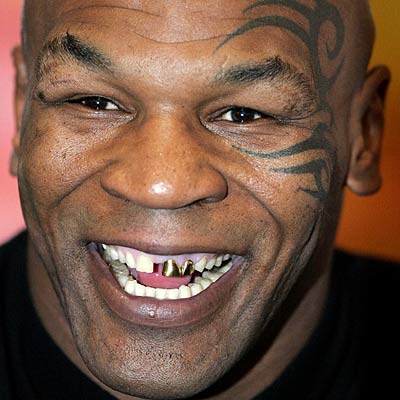
In light of the Michael Vick news, I was glad to see that earlier today SI ran a pictorial of famous athletes who did jail time. They included most of the familiar faces - your Carruth's and Lewis's, McLain's and Denton's, Doc's and Darryl's - but I was disappointed that they only included one boxer on their list - Tyson, of course. How dare they, I thought? The sweet science can put a jailbird starting nine on the diamond that could knock any other bunch of cons straight out of the stadium.

So without further ado, I, Large, self-appointed manager, give you my all-time fantasy batting order of boxers who did prison time:

1. Paul Spadafora - SS
(Multiple sentences, including a 32-month stint for shooting his girlfriend)
I realize this is a controversial decision right off the bat here. Leading off with Spadafora? A freakin alcoholic welterweight? Well, look, I know that Monzon might be a more natural choice, but the way I see it, Monzon is my Jeter-type, and personally I've always preferred my Jeter-types in the two-hole. So I'm hoping for a scrappy, David Eckstein sort of leadoff season from The Pittsburgh Kid here, and if he can't hack it, well shit, Monzon ain't going nowhere.


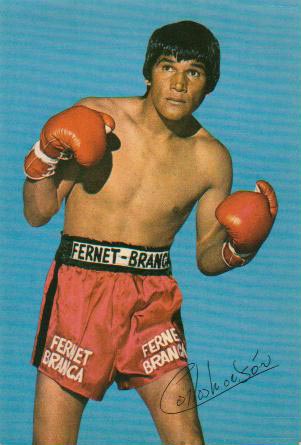
2. Carlos Monzon - CF
(Jailed from 1989-96 for murder, died while out on furlough)
Ah Monzon. My Jeter in the outfield. Not exactly a Jeter in the clubhouse - in fact, one of the worst human beings I have ever had the sour luck to have managed, or even known for that matter. But hey? Whaddya ya gonna do? He's a five-tool slugger and he comes to play. And the ladies... dear God the ladies just go completely, absolutely batshit crazy for him. Until he, ah, kills them that is.


3. Rubin "Hurricane" Carter - 3B
(Did nearly 20 years for murder, released in 1985 after an investigation revealed he had not received a fair trial)
One thing is for certain - ole Rube can hit that ball. Kind of reminds of Carlos Baerga in his prime as a three-hitter, perfect for setting up the murderer's row (no pun intended) he's got coming up behind him. But I worry about playing him at third. It's like playing Sheffield at third - he can field the position, but it's far from an ideal situation. Problem is, I really don't have a true third-bagger on this team. Floyd Sr. has a little experience at the hot corner, but Lord Jesus, you play that whining bastard out of position you'll never hear the end of it. (Want your own All-Star Prison Boxing Team third-baseman jersey like the one up there on the left? Just follow the link.)

4. Jack Johnson - 1B
(Did a one-year gig at Leavenworth for trafficking in prostitutes, a trumped-up charge that was complete baloney)
Oh baby, now's when we start hitting. Who's the NFL prison squad got batting cleanup, huh? Hollywood Henderson? I mean, the Galveston Giant with a bat in his hand is like a cross between Josh Gibson and a brontosaurus standing over the plate. Don't turn your head when our man Jack takes his turn - you're liable to catch one right in the ear.

5. Mike Tyson - LF
(Multiple sentences for rape, drugs, DUI and parole violation)
One of the big things you struggle with when managing this team, besides a clubhouse full of incredibly violent, sociopathic lunatics who happen to be excellent fighters, is whether you bat Tyson before Liston or Liston before Tyson. I've changed my mind on this one about a hundred times. Tyson has more power, but he strikes out a lot. Liston has a better on-base percentage, but he seems to fold in the big spots. I've got it Tyson then Liston for now, and we'll see how that goes. Honestly, despite his propensity for the long ball, I don't know how long I can keep Iron Mike in the starting lineup. The guy is a complete disaster in left. Manny Ramirez is a goddamn Gold Glover in comparison to Tyson in left.

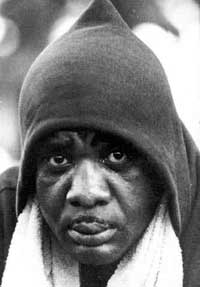
6. Sonny Liston - DH
(Two years - 1950-52 - for armed robbery)
All I can say about Sonny Liston is that he is a miserable son of a bitch and I've been trying to trade him since I took over this team of miserable sons of bitches. But you know what? Despite the fact that he is a reliable .300, 100, 30 guy, nobody wants him. And you know why? Cause he is A MISERABLE SON OF A BITCH! I'm kind of hoping that Monzon kills him. On the other hand, I'm a little worried that he might kill Monzon. I mean, you see what I'm dealing with here? You think Torre had it rough.


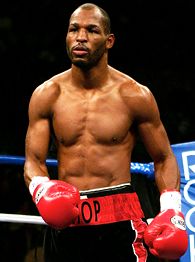
7. Bernard Hopkins - C
(Nearly five years for strong-arm robbery at Graterford in Pennsylvania)
Let me tell you something - no matter what you hear, Bernard is a rock behind the plate. Here's one guy who really seems to have learned something inside the clink. He gets up my ass a little about batting seventh, and in general he NEVER shuts up for one second of the livelong day, but he's a hell of a catcher, a dependable .280 hitter, and he comes up big when the chips are down. So long as Monzon doesn't kill him anytime soon, he's got a job with me for life.

8. Floyd Mayweather Sr. - RF
(A five-and-a-half year stint for drug trafficking)
This guy really, REALLY bothers me. All the talent in the world and yet something just doesn't seem to click. Hell of a right-fielder, though - I got to give him that. Reminds me a little of Rubin Rivera. You look at him in his uni as he runs out to the field and you're thinking, Christ he's another Lou Brock. But then he fails you time and again and the next thing you know you hear he's stealing wallets in the locker-room. Honestly, he annoys me so much that last season I thought about trading him to the NHL prison team for Bob Probert.

9. Prince Naseem Hamed - 2B
(Did five months last year for reckless driving)
I know what you're thinking - can a featherweight even play baseball? Well, he can when he weighs about 180. Our resident Prince is one fat short little second baseman - kind of reminds me of Carlos Baerga not in his prime. Can't hit a lick either, Prince, still living on the reputation of some lucky home runs he banged about a million years ago. Doesn't give me too much trouble, though, which on this freakin team is about as valuable as a .350 average and about 150 RBI's.

Large at Jarry Park

My latest interview with Franchise is up now over at jarrypark.com. Aside from another general recap of the big fight, we also touch on the futures of both Mr. Hatton and Mr. Money Money May, the potential of a bout between said Mr. Money and one Mr. Miguel "Nobody wants to fight me oh no" Cotto, the potential of a bout between said Mr. Hatton and one Mr. Oscar "ooh baby I likes 'em small, yeah baby I likes em SMALL" De La Renta, and the reason why said Mr. Oscar is a lying-ass punk according to one Mr. Floyd Money Money May Sr. Or at least that's what I talk about - Franchise spends most of his time yammering away at how the UFC is better than boxing.

There's only one Mayweather indeed (jarrypark.com)

The Electrocution of Ricky Hatton


Oh Ricky what a pity you don't understand...


First off, yes, I called it right on the nose. All of you who won big feel free to send me a generous tithe. Myself, I didn't win a dime, because, well, it's a long story. I don't gamble anymore. I'll leave it at that.

As for the fight itself, I don't know that I've ever watched a sporting event where I imagine there to be such a startling disconnect between the viewpoints of those who watched it in the arena and those who watched it on TV. This would be primarily an effect of the commentary by HBO's three amigos, all of whom seemed very pro-Hatton and who from the beginning of the fight called it in his favor despite the evidence of what was transpiring in front of them. I suspect that part of this was in the interest of selling the bout, but the lion's share I attribute to a phenomenon I have recently discussed elsewhere.

Harold Lederman scored two of the first three rounds for Hatton, including the first, which I thought was utterly ridiculous. And I usually agree with Harold Lederman's perspective on fights. In his defense, and in defense of the unholy trinity, I will say this - it was a bizarre spectacle Saturday night, almost a spectacle of Orwellian unreality. John Bull's peanut gallery with the sentimentally stupid songs (what it is about these British tough guys and their weepiness? I just don't get it...), Hatton a veritable Tasmanian devil, charging forward with clumsy abandon and seeming like he might be doing something, while Floyd was constantly in urgent retreat and thus seemed like he might be getting the worst of the action. The whole effect at times would be enough, if you were so unschooled and inclined due to partisanship, to think that Hatton was winning.

I can't entirely forgive the announcing team on that front, however, because they've been around the block and they know better. It didn't take a tremendously skilled boxing eye to see what was happening in there for what it really was - a mismatch, a gradual slaughter. I really can't say enough about Floyd's performance, because as I wrote below, there was figuratively no one in his corner for this bout. There he was in Vegas and he might as well have been on a streetcorner in Manchester. Seemingly everyone in the arena desperately wanted him to lose, either for Hatton's sake or just for the sheer spectacle of it. Then the bell rings and he's got this frenetic little midget charging him without rhyme or reason, basically trying to take the fight into the UFC realm, any realm where Hatton perhaps thought he might have a chance at winning.

A lesser man might have lost his cool. The announcers made the point several times early on that Floyd looked very uncomfortable with Hatton's approach, more uncomfortable than he'd ever looked before. For myself, that's how I thought Floyd looked in the opening rounds of the De La Hoya fight, but not against Hatton. Very early on, I thought Floyd took measure of Hatton's punches and realized that he was not in much danger. He relaxed, went to the ropes with that Mamba defense of his, and let Ricky bull away with his meaningless flurries, working incredibly hard to no avail, sapping his strength. Every so often when he saw an opening or when Hatton's energy flagged, Floyd hammered him but good with straight right-hand leads that snapped Ricky's neck like a bobblehead. Those shots added up quickly in there.

Dare I say it - Floyd reminded me of Ali. When a fighter like Floyd or Ali, a true boxer with preternatural speed, ages to the point that they can't stay in perpetual motion enough to continually circle a charging opponent, they need to develop some strategy for survival with their backs against the ropes. Sadly, Ali's strategy, the legendary rope-a-dope, basically boiled down to "suck it up." Foreman tells this great story about having Ali up against the ropes in the Rumble (I'm paraphrasing from memory):

I would hit this man with everything I had and he just stood there and took it. One time I remember hitting him with this shot to his side, one of those perfect shots that you just feel enter the man's body, and with my power you know, when I hit guys like that I was used to them SCREAMING in pain, and right then Ali leaned forward to me and whispered, "is that all you got George?" And I thought to myself, "uh yeah, that's about it."

Time and again, Ali called upon his superhuman powers of absorption (really no fighter in the history of the game could absorb big shots like Muhammad), a strategy that ended up costing him dearly.

Floyd, on the other hand - not enough has been written about this defense that he employs with his back to the ropes. In tribute to Uncle Rog, I've long referred to it as "the Mamba" in my mind, but I think I may be mis-attributing its origin, for I recently saw it used by junior lightweight Joan Guzman in his very impressive win over Humberto Soto, and Guzman is being trained these days by none other than Floyd Mayweather Sr.

But maybe Floyd came up with it himself and Daddy Floyd stole it from him. Whatever. The point is, the shit is incredibly effective. Since the first two cavemen decided to step in the ring, man has tried to figure out the most efficient ways to hold his hands in order to both punch quickly and defend thoroughly. People, I swear, Floyd Mayweather Jr. just may have cracked the code. Of course, this defense depends upon his superhuman reflexes, and maybe could not be used to such advantage by a lesser mortal. But still, I am amazed at what flexibility it affords him - turned to the side, left hand slung low against his ribcage, right hand (with elbow tight to his side) against his right cheek, such that his arms form a backwards L across his torso. To pick off punches, all he needs to do is shift his hands with a little wax-on, wax-off maneuver - the left up and down over his midsection, the right side to side across his face.

From his post-fight press conference, Hatton clearly was baffled and more than a little annoyed with this defense. "Fiddle-faddle" he called it, and in his tone implied that it was less than manly. As Mrs. Large pointed out, he seemed to be saying that Floyd had won by using nothing more than a bunch of tricks. All I can say on that score is that, yes, Floyd did indeed win by resorting to tricks, tricks that for most of us go by the more familiar name of "boxing."

He also won by punching the shit out of Hatton's sheet-pale face. I haven't seen Floyd throwing such hard, effective bombs since the Gatti fight, and though I think part of the reason for that was how easy it was to hit Hatton, I was interested to hear him say after the fight that he had undergone therapy on his hands (shown in one episode of 24/7) with a direct eye towards scoring a knockout. One has to suspect that even then, he knew that he was going to be hammering the Hit Man.

I'm not sure, though, that even he could have predicted such a satisfying knockout. We're going to have to do some investigating into this "check hook" business, because Manny Steward named Floyd's first knockdown blow, and then after the fight Floyd himself reiterated the point - "it was a check hook," he said, something from the gyms in Michigan. Anybody have any insight on that one?

Whatever it was, it was a thing of beauty, and it seemed to literally electrocute Hatton. A shudder went through his entire body, he briefly looked to be almost levitated, and then the life was completely gone form his legs. I do give him a world of credit for standing up, because he was no longer of this world when he climbed to his feet. The end was imminent, and the stoppage I think was just. Floyd finished him with two clean shots, and referee Joe Cortez grabbed what could have been a very nasty third right before Hatton collapsed again.

Later on, I will be discussing the fight with Franchise over at jarrypark.com and in that interview I will give some more of my thoughts on the fight, with an emphasis of what I make of Floyd's retirement assertions. Also, we are now clear to begin the debate for our official No Mas Fight of the Year and Fighter of the Year. As you may recall, I gave Franchise my interpretation of these awards in our Jarry Park Boxing Awards interview, but here on No Mas, the year-end awards are not a dictatorship. I'll post a bunch of candidates for Fight and Fighter of the Year and then based on your votes, comments and feedback, we (I-berg and me) will declare the winners, whether we necessarily agree with them or not. Given the way the year has gone, I think there are some obvious candidates, but if you have any offbeat selections that you think we might miss, feel free to write them in as a comment here or send them to me by email - [email protected]. I'll probably list the candidates in a post next week.
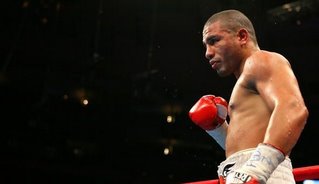

Sunday, December 09, 2007

The Persecution of Floyd Mayweather


I've come to feel that Floyd right now occupies about the same place in the boxing universe that Ali did in the 60's, pre-Vietnam period (keeping in mind that the boxing universe today occupies a considerably diminished space of the cultural stratosphere at large). In this analogy, 50 Cent is Floyd's Malcolm X, which I don't think is a stretch at all. For middle-class white America, hip hop today represents pretty much what the Nation of Islam did in the 60's - black, dangerous, violent, anarchic, contemptuous at every turn of white bourgeois values and proud of that contempt. In fact, hip hop is probably more loathsome and terrifying to the white middle-class now than the Nation was back in the 60's. The Nation was a small fringe movement with little real cultural capital other than its capacity to shock whenever the media gave it a platform, which was rarely. Today, hip hop permeates the bourgeoisie and has become the veritable religion of its children.
We must remember that before Vietnam, Ali's only political stance was to associate himself with the Nation, and if we are going to celebrate him solely for that, we are going pretty damn far down the "all things black and militant are cool" hipster road, because the ideology of the Nation makes Mormonism seem like the work of John Locke. I also don't believe that Ali was tremendously concerned with aligning himself with the struggle of his black brothers and sisters - if the man was anything, he was a raving megalomaniac, and the only struggle on his mind was his own. What black nationalism really seemed to provide Ali at a crucial moment of his mega-stardom, and what in retrospect seems brave about his decision to ally with the Nation despite their legitimate nuthood, was a way to signal with extreme authority to the white media and the white fanbase they represented that he would never take instruction from them, that he would never play by their racist rules - that he was his own proud, powerful black man who would never be their "boy." For years after he took his Muslim name, most of the media continued to refer to Ali as "Clay" and the significance of that was plain. Oh no you don't. We won't let you.

Of course, there always was something comic and unsettling about Ali's revolutionary self-creation, because that revolution was indeed televised. No other athlete ever has so thrived on, so craved, and so brilliantly manipulated the media's attention. Outside of the Nation conversion and the name-change, the main thing Ali was known for in his prime was talking ridiculous amounts of smack about himself in a manic, clownish fashion, ridiculing his opponents with a genuine sense of humor and theater but also with a pointed cruelty rarely seen before or since, and for calling the rounds in which he would score knockouts and then frequently delivering on his promises. In short, Ali didn't even need the Nation to make him a villain because he was already White America's Darth Vader, the boastful black man that nobody could shut up - in essence The Black Man You Love to Hate. He rode an entire country's outrage straight to the bank, laughing all the way.
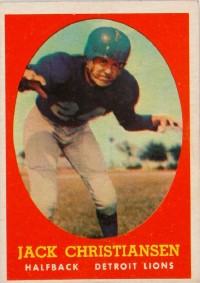
As I've written before, this is why I'm so offended now by the media's creation of the mute, Parkinsonian Ali as The Black Man We Love to Love. It seems like an almost Soviet-level of historical revisionism, and in my mind it takes considerable edge off of what Ali actually did, what he dared to do, because it makes it seem like we were all behind him all along, rather than telling the truth, which is that most of us (and with "us" here I figuratively address my own demographic - white sports fans, white media) were passionately against him.

Most people, I think, are going to be offended that I even begin to compare Floyd to Ali, and on one score I agree that offense is warranted - Floyd's self-creation is in no way as brave or bold as Ali's was, because Ali paved the way before him (and then if you really want to talk bold, there's Jack Johnson... but I digress). But the fact remains that Floyd is a trash-talking egomaniacal loudmouth genius of a boxer defiantly aligned with hip hop and all the dangerous blackness that it represents. The money-flinging, the conspicuous-blinging, and the endless bringing of rhythmic disses and self-mythologizing and preposterous nicknames - to me it is hilarious, playful, pure promotional perpetration that at its best is worthy of The Greatest himself, and yet the media and the fans and just about everybody around seem to revile the guy and all that he represents. There is a wellspring of love out there for "rap," the so-called Ali edition, circa 1963. But in 2007 it's pretty much the same old story when a black athlete takes this guise - how dare he?

Watching the fight last night, I felt some shame on this count. Floyd seemed like the loneliest man in the world walking into that ring, and I couldn't help but feel it was simply because, to paraphrase Larry Holmes, he just didn't have the complexion to make the connection. Money May now reigns as The Black Boxer We Love to Hate and I think the word "Black" in that title tells much more of the story than anyone would ever care to admit. If Floyd were white and that were the only difference in this fight, if all the hype was the same, 24/7, etc. - I have no doubt that the terms of the contest and the tenor of the coverage would have been considerably different. There would have been a thunderous uproar of flag-waving fervor when he walked into the ring to "Born in the U.S.A." There would have been violence in the crowd when Hatton's throng of British louts had the predictable class to boo the American national anthem, because the British louts wouldn't have ruled the arena. If Floyd were white, there would have been an overwhelming angle of national conflict to the portrayal of the bout and some genuine national pride in his victory. This would have happened whether he played up that angle or not, and the fact is, he did play up that angle, he did try to identify as an American in the build-up to this fight and did it often. But it didn't take. I wonder why. Back in 1963, Americans hated Cassius Clay so much that they universally rooted for Sonny Liston to defeat him, one of the most genuinely evil human beings prizefighting has ever known. A bad black man, but a quietly bad one, one who seemed to know his place in the world. Somewhere in the distance, Little Johnny Cougar sings "this is our country..."

(Thanks to everyone who commented or wrote emails to congratulate me on my successful prognostification. I will sing my own praises a little bit and give a full re-cap of my thoughts on the fight tomorrow - L)

Friday, December 07, 2007

Will to Power

"You got a guy who's flamboyant and you got a guy who's a tough club fighter... this right here is just like Sylvester Stallone and Apollo Creed. The reason why he was able to make Rocky one, two, three, four, five, AND fucking six... the only reason he was able to make them kind of movies is because people believe that bullshit. See... this ain't gonna be that Rocky Seven movie because the real motherfucker's gonna win for real... the real guy who's supposed to win is GONNA win. - Roger Mayweather

As I listened to Uncle Rog voice the above words of wisdom last night, I nodded my head in solemn recognition, never more aware of how great minds think alike. I myself voiced much the same sentiment to Franchise on Wednesday over at his site, jarrypark.com. People love to think that boxing is a contest of wills and a contest of wills alone. This is largely what motivates Hollywood's love affair with the sweet science, the cinematic idea that a fight is entirely a measure of what's inside a man's heart. This rah-rah bit of nonsense ignores the fact that at the highest skill levels boxing is primarily an athletic contest where will is indeed a factor (as it is in all sports of pain and endurance) but a factor that only comes into play when you have the speed and reflexes and vision, when you have the God-given ability to level the playing field.

My example to Franchise on this score was that you could have the will of an elephant, of a hundred elephants, but if you happen to be a so-so tennis player with a weak serve you are NEVER going to beat Roger Federer in a thousand tries. Of course, boxing is very different than tennis - there is the fabled "puncher's chance." Now and then in the squared circle, a man who is completely outclassed on all fronts manages to land that one magic punch that turns the tide in his favor. It doesn't happen often, but when it does, what a thrill it is. It speaks to all of us supremely untalented gobs out here walking around wondering if we'll ever land the big one.

For an example, I turn to Lennox Lewis, who was certainly vulnerable to the magic punch of lesser mortals in his time, ate two of them in fact, one from Hasim Rahman and one from Oliver McCall. The knockout McCall laid on him was really in my mind the epitome of the puncher's chance, a wild right thrown with eyes completely closed that happened, almost as if guided by some force not his own, to find its mark and fell his man.

We must remember, however, that there were some important preconditions that went into creating this situation:
  1. Lennox was undertrained, overconfident and downright lazy in the ring.
  2. For as great as he was, Lennox was never known for having a great beard.
  3. Though an utter disaster as a fighter on almost every front, McCall had legitimate power.
Which brings me to Mayweather/Hatton. As I've said, I am in complete agreement with Uncle Rog that Ricky Hatton is a glorified club fighter, a genuine Rocky in the flesh, and out here in the real world, Rocky always loses. Everything, every single factor, is in Floyd's favor - he's faster, he's bigger, he's on his home turf, he has more experience in big situations, he's clearly much more relaxed, and what's more, watching 24/7 has led me to believe that he has infinitely more skilled trainers and handlers guiding his progress. One of the most telling exchanges in the whole 24/7 series was Hatton's ridiculing of Floyd's pad-regimen with Rog, the oft-showed sequences where Floyd, while looking at the camera, goes through his breakneck rhythmic flurries of punches and feints.

Obviously I'm not in Hatton's camp and all I see is what the camera shows me, which is quite probably far from the whole story. Nevertheless, what I see of Floyd's training is a regular and almost unimaginable display of the kind of speed and reflexes that wins fights. What I see of Hatton's training is him lunging around the ring after his broken-down lout of a trainer wearing a big belly pad that you couldn't miss if you threw an anvil at it. In the gym, Hatton strikes me as a man who's trying to convince himself of the soundness of his own fury, of the enormity of his will to prevail in the face of an overwhelming deficit in skill.

It's not on mate, it's just not on. The only chance in hell that Ricky Hatton has of winning tomorrow night is the puncher's chance, and of the three preconditions that I mentioned before in relationship to Lennox, only one is even possibly at play with Mayweather. Floyd is a perfectly conditioned athlete who, because of his healthy regard for his own safety, never underestimates his man. Also, Ricky Hatton is not a puncher of note - he's small and his shots are wide and unbalanced. The only thing that one can wonder about is Floyd's chin, for though he has stood up to loads of punishment in his career and taken it with aplomb, we have never seen him walk one single step down queer street, and so we have no idea how he would cope should he ever find himself on that lonely avenue.

But then, the fact that Floyd has never been seriously shaken in a fight is telling in and of itself, for he has certainly faced a number of opponents with the firepower to shake a man - Manfredy, Chico, Jesus Chavez, Gatti, Oscar. I remember reading about this conversation that Floyd had with some R&B chick in a rap magazine somewhere, where she said to him, "I don't like boxing... I don't like watching people get hit," and he instantly replied, "well you should come see my fights then cause I don't get hit."

Indeed he don't. As I've made clear time and time again, I prognosticate an easy victory for Floyd, and I feel very confident about that prognostification. Plus, I have to add that the last episode of 24/7 has me thinking that it will be a stoppage. Hatton looks doubtful to me and I think he may well be about to meet the same fate as Arturo at the hands of Money May. So here it is people, take it to the bank - Floyd TKO 10.

Deep Tennis with Steve Tignor

“Steve, the U.S. Davis Cup win was impressive, but I was surprised by how civilized it was. I remember Davis Cup being pretty volatile and political back in the day. Take us back, if you will, to some of the crazier shit that went down..."


You’re right on both counts. The atmosphere for last weekend’s U.S.-Russia Cup final was completely apolitical. Andy Roddick said the only thing he remembered about the Cold War was Rocky vs. Drago, and when Dmitry Tursunov, a Russian who lives in California, was asked what the two countries had in common, he said they both “have owned Alaska.” What you probably remember were the Davis Cup’s angry glory years of the early 80s, when little Johnny McEnroe, just out of his teens, was providing the thrills and chills. He led the U.S. to the title in ’81 and ’82 while almost being defaulted by his own captain, Arthur Ashe, for his behavior during a doubles match in '81 (at the same stadium where the U.S. beat Russia last weekend, Portland’s Memorial Coliseum).

Those were wild times, but you wouldn’t say Mac was a political figure, exactly, unless you count the time he yelled at a linesman during a home tie, “Are you an American!!!???” It was in the years just before his arrival, the early-to-mid 1970s, when Davis Cup, like a lot of other sporting events, went current events on us. The background was the Cold War, but the far-reaching nature of the Cup—every tie is played on one country’s home soil; there are no neutral sites—put it in the crosshairs of local conflicts around the globe.

At the start of the 70s, the Cup’s format was also changing. For decades, the champion received a de facto bye into the following year’s final, called the Challenge Round. This helped the U.S. and Australia, the world’s two tennis super-powers, maintain a choke hold on the event (the two still own far more titles than any other nation). With the advent of Open tennis and the game’s continued spread to non-Anglo corners of the world, the champs’ free ride to the Challenge Round was abolished and pros were grudgingly allowed to participate, though not fully until 1973. (Davis Cup is run by tennis’ old-guard, amateur-era ruling body, the International Tennis Federation, which as of 1977 was still known as the International Lawn Tennis Association. A musty, traditional quality clings to the Cup even now—each round is known as a “tie” and individual matches are “rubbers”; the matches that don’t count end up with the coolest name of all: “dead rubbers.”)

At the same time, international politics was increasingly visible on the sports landscape. The most famous example was the kidnapping of Israeli weightlifters by Palestinian terrorists at the Munich Olympics in 1972, but tennis wasn’t far behind. A month later, the same terrorist group, Black September, issued death threats against two Jewish members of the U.S. Davis Cup team, Brian Gottfried and Harold Solomon, as they were getting ready to go to Romania to play the final. Gottfried (pictured right) said no one was overly bothered by it; the team had “played the whole year surrounded by guys in raincoats with machine guns.”

He was probably referring to a tie that the U.S. had played earlier that season in socialist Chile, a hotbed of anti-Americanism at the time. There the team’s captain, Dennis Ralston, had received his own death threat. A year later the U.S. government helped engineer the successful Pinochet coup in Chile, which brought a whole new round of political protests to the sports world. These peaked in Davis Cup three years later when Sweden, led by 19-year-old Bjorn Borg, hosted the Chileans in Bastad. Swedes protesting the Pinochet regime promised to disrupt the tie and even threatened to kill Jaime Fillol, a Chilean player. (Who knew the Swedes had it in them?) Chile tried to get the tie moved to a neutral site. They were denied and the tie was played “almost in private and under heavy guard on a court besieged by protesters,” as DC historian Alan Trengove put it. “Armed boats patrolled the harbor, aircraft hovered overhead, and huge nets around the stadium protected the players from projectiles hurled by demonstrators.” A thousand policeman were called in for protection.

There were many incidents in this vein around the world in Davis Cup. But it was South Africa and its apartheid government that would prove to be the most long-lasting problem, and lead to a particularly low moment for the competition. The country had been part of the Anglo tennis establishment for decades. They didn’t produce a dynasty, but they gave tennis one of its finest doubles teams, Bob Hewitt and Frew McMillan—they won a career Grand Slam together—as well as one of its quintessential characters, Cliff Drysdale (pictured left). But at the start of the 70s, South Africa’s inclusion in both the new men’s tour and the Davis Cup were controversial. Arthur Ashe protested at a tour meeting, but Drysdale, the ATP's founder, said that his tennis federation shouldn’t be lumped in with his government. As for Davis Cup, the ITF had banned South Africa in 1970. Three years later, Ashe was invited to play a tournament in Johannesburg, in part because the country wanted to be considered for re-inclusion in the Cup. Ashe famously accepted and reached the final.

South Africa was readmitted to Davis Cup the following year; the ITF saw the country's tennis federation as a separate entity from its government. The sport's officials were trying, in their way, to keep politics out of the game. But they only succeeded in tying the two closer together, with dire consequences for the Davis Cup.

First, Argentina refused to play South Africa in the opening round in 1974 and defaulted. Then the Chileans wouldn’t play them on their home soil, forcing the tie to be moved to Colombia. South Africa, anchored by Drysdale and Hewitt and McMillan, won there and at home against Italy. Suddenly, the world pariah was in the Davis Cup final, where they were scheduled to play India, led by Vijay Amritraj.

Except that the Indian government refused to let its team play. The South Africans had the home-court advantage but were willing to go anywhere. India’s tennis federation wanted to play, but the government, which said that an Indian ethnic minority was being oppressed in South Africa, was having none of it. So, as it says in the record books today, the 1974 Davis Cup champion was South Africa, in a walkover.

Bizarrely enough, the country remained in the competition until 1978. In ’75, Colombia and Mexico defaulted to them; the next year Mexico did the same again; and in 1977, a protester in California got into a violent on-court confrontation with U.S. captain Tony Trabert during a tie between the Americans and South Africans (the U.S. won 4-1). By the middle of '77, 15 countries had withdrawn from the competition in protest. Finally, in 1979, as the DC was reconsolidating itself into the World Group format that it uses today, South Africa was banished once again, this time until 1992 and the demise of apartheid.

Sports have their share of plagues now: steroids, potential match-fixing, multi-million dollar player salaries, and media overexposure, among others. You could say putting politics into the mix just made sports in the 70s even uglier, but it also made the games more honest—they couldn’t hide behind the “entertainment” façade. Looking back, the disruptions of Davis Cup in the 70s seem shockingly, even satisfyingly, weighty compared to the issues we blather on about today.
----------------------------------------------------------------------------------------
Steve Tignor is the executive editor of Tennis magazine and we're lucky to have him as a regular contributor here at No Mas. For more of his writing, check out his weekly column, The Wrap, on the Tennis website.

Thursday, December 06, 2007

The Commutative Property


Remember Ricardo Mayorga's logic before his bout with De La Hoya as to why he was certain to beat The Golden Boy? Shane Mosley, Mayorga reasoned, beat Oscar twice. And Vernon Forrest beat Sugar Shane twice. And I, proclaimed Ricardo, beat Forrest twice! You see? It's simple mathematics, man! By this rationale, the Matador would have had us believe that not only was he going to beat Oscar, but he would beat him again in the rematch.

Well, we all know how that worked out. Math, as one would imagine it so often has in the past, failed Ricardo Mayorga once again. But my point here is not to discuss the Matador - it's to illustrate that by the boxing theorem he advocated, one Ricky Hatton already has defeated a Mayweather in the ring by the commutative property. As most fans of the Fat Man know, Ricky won his first meaningful belt, and the lion's share of his respect in the fight world, in his 2005 defeat of the great Kos Tszyu, an upset that made Hatton the Ring fighter of the year.

Ten years prior, Tszyu defeated a 34-year-old journeyman with a 54-11 record going into the fight. About the only thing this pug had going for him was his nickname, a doozy - "The Black Mamba." It was Roger Mayweather, Uncle Rog, now trainer of his philthy rich nephew, the universally regarded Money Money May.

As you'll see below, despite the fact that he was 34 and out of gas and had legs skinnier than a turkey's, Uncle Rog still had some tricks up his sleeve for Tszyu. Headbuttin. Grabbin and wrasslin. Groin-punchin. Ole Rog was a veritable treasure trove of squared circle illegality, and people, I ask you - would you expect anything less?

Bert Sugar Eat Your Heart Out

On this night 52 years ago, Dr. Joyce Brothers became an enormous national celebrity, setting herself up for a career as a television and radio personality, a career that lasts until this day.

So what did she do? Well, she answered the $64,00 question. Her area of expertise? Boxing, of course.

The infamous mega-hit quiz show of the 50's made many a future star - Patty Duke, Barbara Feldon, and yes, Joyce Brothers. Until her appearance on the show, Brothers was a housewife with a doctorate in psychology. She tried out for the quiz show in the hopes of earning some money and was initially turned away. Here's what former host, Sonny Fox, had to say about Brothers:

She went down originally and presented herself as a psychologist, and she had an expertise in something and, I'm not sure I remember what it was, but it certainly wasn't boxing. And they said to her, "Well you're wonderful as a personality but we're looking for those dramatic juxtapositions." The marine officer who is an expert cook. The shoemaker who knows about opera. Those kinds of anomalies. That's what we're looking for. For instance, if you knew about boxing we'd love you!"

Joyce herself readily admits that this was the case. She knew nothing about boxing prior to her first audition, but when producer Mert Koplin suggested that becoming a boxing expert was what would get her on the air, well, she went home and became a boxing expert. A few weeks later she went back and said, I'm ready, I'm a boxing expert. They tested her and she passed and that was that. She was on.

Of course, we all know today that The $64,000 Question was completely rigged. In her early appearances on the show, Brothers was given easy boxing questions and she answered them, making it through to the $16,000 stage without difficulty. Evidently, at that point the producers of the show decided that they would knock Brothers off the program, because she wasn't testing well with the audience, which was the whole essence of the enterprise and the ultimate source of the scandal. Contestants that the audience seemed to like were given the answers and kept on the air, while contestants the audience didn't seem to like were knocked off with impossible questions.

So Joyce was expected to be shot down with her $16,000 question, which was...

"Who refereed the most heavyweight title bouts?"

The architects of her demise must have figured that no matter how much she was studying the sweet science at home, she couldn't possibly know trivia about boxing referees. And yet she nailed the question (the answer was "Arthur Donovan") and all of the rest of the impossibly arcane questions they would throw at her all the way up to the multi-part $64,000 question, all because, unbeknownst to the powers that were, she had an ace up her sleeve.

The subsequent scandal surrounding this show would mar the reputations of almost everyone involved with it, contestants, hosts and producers alike. And yet Brothers emerged with her reputation intact, largely because she was the only person who ever succeeded on the show who the producers actively tried to defeat. But despite the fact that they weren't feeding her the answers, there's a very good chance (through pure chance itself) that she was getting the answers anyway. The venerable Nat Fleischer (pictured right), publisher of The Ring magazine and encyclopedia, grandfather of boxing journalists and historians, had been employed by The $64,000 Question to draw up the show's boxing questions. As it turned out, Fleischer also was a good friend of Joyce Brothers' father and was coaching her on the side in her march towards boxing expertise.

Brothers always denied any cheating during her participation on the show, and that story wasn't probed very deeply, because, as I mentioned, she wasn't implicated in the larger scandal because she was never fed any answers by the producers of the show. But the fact of the matter remains that even for someone who claimed to be memorizing as many boxing facts as she could, it's almost impossible to imagine that a neophyte to the sport could have known the answers to the questions they hit her with unless she had some idea they were coming. Even she seemed to intuit that some further explanation was necessary, and told investigators that one of her prime sources for studying for the show was Nat Fleischer's book, Ring Facts.

As we now are well aware, Brothers used the celebrity she gained from becoming only the second woman to go all the way on The $64,000 Question to start a successful career as a syndicated columnist and pop psychologist. All because she knew the answers to the questions below. How many of them do you know? My feeling is that no man, woman or child alive knows the answers to all of these questions, not even Bert Sugar himself. I'll print the answers tomorrow:
  • "Who was the referee in the Dempsey-Tunney "long-count" fight?
  • "What man refereed the comeback attempt of an ex-champ against Jack Johnson at Reno, Nevada."
  • "What was the glove that gladiators wore in ancient Rome?"
  • "Who was the first scientific boxer to become champion of England? When?"
  • "Who was the English champion who taught Lord Byron how to box?"
  • "Who wrote the essay 'The Fight'?"
  • "Who defeated whom in the fight that essay is about?"
  • "When was that fight?"
  • "What was the nickname of the loser of that fight?"
  • "What was the full name of the Marquis of Queensbury?"
  • "Whom did Primo Carnera fight in his 1933 heavyweight title defense? Where?"
  • "How many times did Jack Dempsey knock down Luis Firpo?"
  • "And how long was their fight?"

Wednesday, December 05, 2007

Large at Jarry Park

I did my regular interview with Franchise today over at his site, jarry park.com. Predictably, we spent most of our time talking about Mayweather/Hatton, and predictably, I gave my prediction. Usually, I wouldn't be so cavalier about giving the scoop of my prognostification to another site (much as I love the Chise) but in that I think most No Mas readers are well aware of my feelings on this one, I thought it wasn't a problem to voice them on the Jarry Park airwaves. So if you really can't wait for my regular prognostification post on Friday, listen to this interview and you'll get the lion's share of my thoughts on the matter.

Classic No Mas - The Big Ump in the Sky

(They are probably as apocryphal as Abner Doubleday, but nevertheless, the reputed last words of Shoeless Joe Jackson sum up the Christian ideal of God in such stark, ball-playing terms, one imagines that even if he didn't say them, he must have been thinking them. Here's our post from one year ago today on the anniversary of Jackson's death - L.)

On December 5th, 1951, Shoeless Joe Jackson died of a heart attack at his home in Greenville, South Carolina. Sixty-three years old, one of the greatest baseball players who'd ever lived, he'd been banned from the national pastime for 31 years.

Jackson maintained his innocence in the Black Sox scandal to the very end, but by all accounts, he didn't let the issue ruin his life. He played in semi-pro leagues and for barnstorming teams after his banishment, and then he moved to Greenville with his wife and started a successful dry-cleaning business. Every now and then, he would break out his famous bat, "Black Betsy," and take a few swings with the locals in a sandlot game. He was a beloved figure in Greenville at the time of his death.

Still, he was clearly haunted. His last words are reputed to have been, "I'm about to face the greatest umpire of all and He knows I am innocent."

It was awfully Manichean of Joe to view the Lord as The Big Ump in the Sky. No nambi pambi nonsense, no purgatorial bullpens or multi-lifetime bans, just Safe or Out on the final slide into home. He makes you no promises, The Big Ump. He just calls it like He sees it.

(The shot below is of Joe Jackson with his nephew in a liquor store he owned in Greenville - the picture was taken not long before his death.)

Tuesday, December 04, 2007

The Strange Case of Stella Walsh


Twenty-seven years ago today, the Polish-born former Olympic gold medalist Stanisława Walasiewicz, known here in the States as Stella Walsh, was killed as an innocent bystander to a robbery attempt in Cleveland. She was 69 years old. It was a tragic death, and one that led to a most bizarre discovery.

Walasiewicz's family emigrated to the U.S. when she was an infant. Ineligible for the U.S. Olympic team due to her lack of citizenship, she started running and training in Poland in the 20's, where she became an international star. Her crowning glory came at the 1932 Summer Games in L.A., where she won the gold medal in the women's 100 meters, tying the world record in the process. At the 1936 Games, she won the silver in the 100m, coming in second behind Helen Stephens of the U.S. In the charged climate of the Nazi Olympics, Stephens was accused of being a man, a charge that ironically Walasiewicz seconded. Stephens was forced to submit to genital inspection to prove her gender, and she came out with flying colors - all woman. (In the picture above on the left, Stephens (left) and Walasiewicz (right) shake hands.)

Walasiewicz continued her career on the track until the 1950's, even winning a U.S. national title in 1951, when she was 40 years old. In 1975, she was inducted in the U.S. Track and Field Hall of Fame. At that point, she was an active leader of all sorts of Polish-American youth and sporting associations, endeavors that she continued until her untimely death in 1980.

During a routine autopsy of Walasiewicz's body, it was discovered that she possessed male genitalia. A more detailed investigation also revealed that she possessed the male XY chromosome. Based on these facts, she would have been ruled ineligible to compete in women's events, and there was brief but spirited debate in the IOC about the possibility of posthumously rescinding her medals before the matter was dropped altogether.

Gender tests became mandatory in the Olympics starting in 1968, spurred by the discovery at the 1967 European Championships that another Polish sprinter, Ewa Klobukowska, possessed the male chromosome. Klobukowska was subsequently stripped of the gold and bronze medal that she won at the 1964 Tokyo Games. Sadly, this was a heinous injustice - tests ultimately proved that Klobukowska's chromosome was not the male XY but in fact a genetic mutation, XXY, that in no way affected her gender or sex organs. Olympic gender testing was halted at the Sydney Olympics in 2000 due to pressure from the athletes, and now at the Games you are taken on your word as to your gender unless suspicions are aroused otherwise. In this day and age, it seems like the Olympic detectives have their hands full anyway with far more pressing matters.

Monday, December 03, 2007

Ja(Marcus) Rule

Large and Mrs. Large were at the Raiders/Broncos game in Oakland yesterday. The tickets were a gift from my father-in-law, part of his long-term project to convert me into a Raiders fan, which, of course, is never going to happen (dah, SBXV? Jim Plunkett? Rod Freakin Martin? fugheddaboudit...).

But I'm certainly not above going to see the Silver and Black, particularly when it involves the historic first snaps of what Raiders' fans everywhere are hoping will be the long reign of JaMarcus (it's impossible to tell, but the picture over there on the right is the huddle before Ja Rule's first play - I know I know, Neil Leifer I am not). The crowd went berserk when Russell entered the game in the second quarter, although I must say, "berserk" in California barely registers with I consider civilized applause at a preseason game at the Linc. It's just the facts of life out here - the sun is always shining, the produce is always ripe and luscious, the air is sweet with the fragrance of persimmons. In such a setting, what happens on the field is simply not a matter of life and death.

But getting back to the field - my first observation of Ja Rule is that the kid is gigantic. I get the same feeling looking at him that I got when I first took a look at his Raider teammate Daunte Culpepper in a Vikings uniform - it's just hard to believe that he's a quarterback. He looks like he could more than handle himself on the d-line. And yet there he is, running like a gazelle and hurling bullets. He drops back comfortably, he moves beautifully, and he throws effortlessly. In his second series, he whipped off an 18-yarder to Ronald Curry that really opened my eyes. It looked like he flicked it, like it was a pitch pass in the flat. Jerry Porter was quoted after the game as saying that Russell's ball is smoking, and believe me, that much was clear all the way up in the nosebleeds.

Leading up to the game, while the rumors were flying everywhere that Russell would see action on Sunday, he made it clear that he has very high expectations of himself, citing crosstown hero Joe Montana's first season with the 49ers as his blueprint - ironically, Montana saw his first significant action in the Niners' twelfth game of the '79 season against the Broncos.

I was impressed that he happened to know that much about Montana, but myself, I'm thinking that if JaMarcus wants to start making historical comparisons, he should consider this fact: Only three former first-pick-overall quarterbacks are currently enshrined in Canton - Terry Bradshaw, John Elway and Troy Aikman. And we might as well add another name to that list right now - a certain Chunky Soup enthusiast over in Indianapolis.

Looking at those names, one thing immediately jumps out at you - not a one of them had an incubation period in the NFL. It was baptism under fire for all four with the hopes of their respective franchises lying in the balance. Bradshaw was one of the most ballyhooed players to come out of college in the history of the league, and he made his debut as a starter in the Steelers' first game of 1970 against the Oilers. He went 4-16 and generally looked completely incompetent before Chuck Noll lifted him in the third quarter for a much less ballyhooed Terry, Terry Hanratty. Over the next six games, Bradshaw would throw 12 interceptions against only two TD's, at which point Noll had mercy and made Hanratty the starter. Terry was a national joke by then, and it's a real credit to the man that the experience of his first season didn't break him.

Elway's rookie campaign wasn't quite so miserable, although it wasn't exactly a lovefest either. Fourteen picks versus seven TD's - a completion percentage under fifty percent. In his first game, Broncos/Steelers 1983 at Three Rivers, he did little of note other than get massively sacked by the legendary goon Jack Lambert. Elway would later say of Lambert and that game, "He had no teeth and he was slobbering all over. I'm thinking, `You can have your money back, just get me out of here, let me go be an accountant.' I can't even tell you how badly I wanted out of there.''

Most of us No Masians probably remember the inaugural campaign of the Aikman era in Dallas. 1989, what a year to enjoy for Cowboys-haters everywhere, although even then you had a definite feeling in your stomach that they were going to have the last laugh. The Cowboys first game of '89 was historical for all sorts of reasons - Jimmy Johnson wearing Tom Landry's headset and Troy Aikman taking snaps as the first rookie quarterback to start for Dallas since Roger Staubach in 1969. The game went as the rest of the season would for the 'Boys - the Saints crushed them 28-0 and Aikman threw two picks in a horrendous outing. It was the first of 15 losses he would endure as a rookie.

Even Peyton Manning, who had far and away the most successful first year of this distinguished crew, had a difficult day of it in his pro debut, throwing three picks and zero TD's as the Colts lost the first game of '98 to Dan Marino's Dolphins, 24-15. Placed against that lot of misery and deflated hopes, the first day of Ja(Marcus) Rule seems nine holes at the country club. Two series, a few lasers on down-and-outs and a fumbled snap, hit the showers kid we love you. Christ they even won the game! It almost makes you wonder if the stars are realigning over Raider Nation.

Sunday, December 02, 2007

Giants Down Under


Fifty-one years ago today, the U.S. men's basketball team won the gold-medal game at the Melbourne Olympics behind the heroics of their two stars, Bill Russell and K.C. Jones. Disposing easily of the Soviet Union, 89-55, the American team won its fourth consecutive gold medal in basketball since the sport entered the Summer Olympic program in 1936. It wouldn't be until 1972 that the U.S. would taste defeat in the Olympics, in the controversial final against the Soviets in Munich.

Russell and Jones, teammates at the University of San Francisco, were just coming off their 1956 national championship with USF, and of course the gold medal in Melbourne was only another precursor to the great career they would share together with the Celtics. Both Hall-of-Famers, they are the only names on the 1956 roster that anyone would recognize today, and yet they were more than enough to allow the U.S. to cruise to victory down under - the smallest margin of victory for the Americans in the entire tournament was 30 points, and the largest was 82 in a 101-29 thrashing of Thailand (one can only imagine what the Thai players made of Russell.) Oh the glory days of U.S. Olympic basketball, back when we just sent our team of assembled giants out to terrorize the rest of the terrified world. Good times, now as extinct as clean athletes and the Cold War.

Saturday, December 01, 2007

December's First

All born on the first of Decemb-o and submitted for your approv-o - two successful managers of beloved N.L. franchises (one of them one of only six shortstops to ever win the NL MVP award, if undeservedly), one of the NFL's best-known roid-inators, a Full-Bodied Italian, a former S.I. siren who married a Ranger, a statuesque sculpturess, a black-bat-wielding baseball banger, one of baseball's founding racists, a murderous druglord and inspiration for a No Masian classic, Mexico's greatest golfer, Portugal's captain, a Sri Lankan cricket legend turned politician, a speed-skatin' Canadian, the first Canadian ever to win the NL MVP, a mad Mongolian wrassler, one of the greatest athletes in the history of the Soviet Union, one terminally unhappy Knicks fan, and the funniest man who ever lived and a true patron saint of the entire No Masian enterprise.