Two of a Very Rare Kind
NO MAS BOOK REVIEW
Clemente: The Passion and Grace of Baseball's Last Hero - David Maraniss (Simon and Schuster, 401 p.)
Pistol: The Life of Pete Maravich - Mark Kriegel (Free Press, 381 p.)
I just finished reading two recent sports biographies back to back, Clemente by David Maraniss and Pistol by Mark Kriegel. Both books have been well-received - Clemente, which came out last year, got a very favorable review from George Will in the NY Times and went on to be one of their notable books of 2006, and Pistol has been everywhere since its release in January, with such noted literary critics as the Sports Guy jumping on the bandwagon.
I didn't plan to read these books one after the other - it just worked out that way - but it was a strange coincidence. It wasn't long before I was struck by the similarities between Clemente and Maravich - Pittsburgh connections (Maravich through his father, Press), flashy styles that earned them as many detractors as fans, nervous constitutions and careers littered with injuries, a dissatisfied, visionary streak that led them each to fringe, cultish pursuits, and finally, of course, early, tragic deaths that immediately transformed their complicated legacies into legends befitting those who die young.
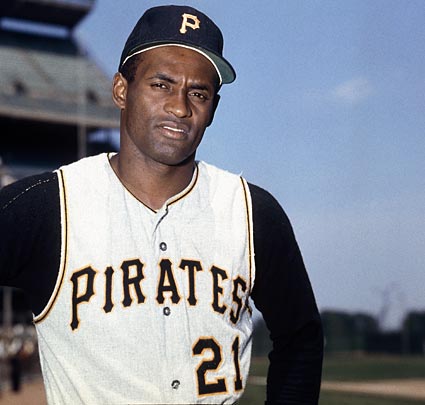 Of the two books, my biggest beef was with Clemente, although I also think this book has the more rewarding passages. My overarching criticism is that it reads like a 400-page apologia for a man who even when considered in the kindest spirit has to be said to have borne some rather glaring faults. Maraniss' project here is to deify his subject, and he glosses over gross misconduct with evasive language that at times borders on comic. Introducing an anecdote from early in the 1966 season when Clemente punched an autograph seeker, Maraniss writes, "In the ledger of his life, here was a day for the case against sainthood." There were not many such days, however, according to the author. He takes Clemente's side on his infamous, largely selfish-aggrandizing outbursts to the press, makes him out to be the most dignified family man who ever lived while only alluding to the fact that he was a heroic womanizer, and in general spins everything about Clemente to make it seem as if he were a misunderstood 20th century shaman, to the extent that he actually seems to give credence to the idea, apparently believed in his hometown in Puerto Rico, that he had great healing powers (because of his interest in massage.)
Then again, what was I to expect from a book that anoints Roberto Clemente as "baseball's last hero"? (hey Stargell, piss off... McCovey, you still here? Jeter, get your shinebox...) And trust me, I wasn't looking for a hatchet job. I was similarly disappointed with Richard Ben Cramer's DiMaggio for going to such great lengths to make Joe D. seem like a colossal dick. When you read a book like this, and the author's bias is so readily evident, credibility is lost almost instantly.
That said, Maraniss is a great writer, and some of the crucial passages of this book are riveting - in particular, his recitations of the 1960 and 1971 World Series, and his investigation into the plane crash that killed Clemente. Honestly, just for the plane crash stuff alone, the book is worth reading. The facts that he unearthed behind that whole business will blow your mind.
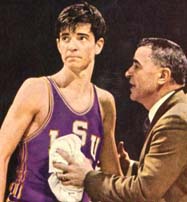 Pistol does not have any such dramatic highs - the book chugs along on a strong wave of competence from the start and keeps going straight through to the grisly finish. I would have liked a little more in-depth treatment of Pete's days in the NBA and a little less of the Oedipal drama between Pete and father Press, but these are quibbling concerns. Kreigel's book makes a convincing case for Maravich's standing in a very rare category - the athlete as visionary and artist. He was a driven, melancholy perfectionist whose relationship to his sport was more aesthetic than perhaps any other athlete I can think of who achieved such Olympian heights. McEnroe, maybe, belongs in this elite club, and like McEnroe, the picture that Kriegel paints of Maravich is of a man who wrestled with his sanity and wild mood swings that bordered on manic depression. With his relentless beer-drinking and his obsessions with karate, vegetarianism, UFO's, and eventually Jesus, Pete seemed always to be seeking an escape from the sport that he loved and yet increasingly felt to him like a prison. Kriegel makes a lot of comparisons between Maravich at his lowest points and the late-period, doomed Elvis. It sounds about right.
The only warning I'll give you about Pistol is you might want to give the Prologue a miss. It takes a clumsy stab at the mythopoetic and falls well short of the mark. Here's a characteristic excerpt:
Press Maravich was a Serb. Ideas and language occurred to him in the mother tongue, and so one imagines him speaking to Pistol... as a father addressing his son in an old Serbian song: Cuj me sine oci moje, Cuvaj ono sto je tvoje... Listen to me, eyes of mine, guard that which is thine...
Honestly, I almost didn't read the book after starting off with this sort of bathetic crap. But I'm grateful that I persevered - once he gets into it, Kreigel steps out of the limelight and lets the story take over with crisp, efficient prose. I imagine that, as with his Namath bio, this will become the definitive book on Maravich for some time.
(Note: The Pete Maravich SportsCentury is on ESPN Classic today - see below)
Clemente: The Passion and Grace of Baseball's Last Hero - David Maraniss (Simon and Schuster, 401 p.)
Pistol: The Life of Pete Maravich - Mark Kriegel (Free Press, 381 p.)
I just finished reading two recent sports biographies back to back, Clemente by David Maraniss and Pistol by Mark Kriegel. Both books have been well-received - Clemente, which came out last year, got a very favorable review from George Will in the NY Times and went on to be one of their notable books of 2006, and Pistol has been everywhere since its release in January, with such noted literary critics as the Sports Guy jumping on the bandwagon.
I didn't plan to read these books one after the other - it just worked out that way - but it was a strange coincidence. It wasn't long before I was struck by the similarities between Clemente and Maravich - Pittsburgh connections (Maravich through his father, Press), flashy styles that earned them as many detractors as fans, nervous constitutions and careers littered with injuries, a dissatisfied, visionary streak that led them each to fringe, cultish pursuits, and finally, of course, early, tragic deaths that immediately transformed their complicated legacies into legends befitting those who die young.
Of the two books, my biggest beef was with Clemente, although I also think this book has the more rewarding passages. My overarching criticism is that it reads like a 400-page apologia for a man who even when considered in the kindest spirit has to be said to have borne some rather glaring faults. Maraniss' project here is to deify his subject, and he glosses over gross misconduct with evasive language that at times borders on comic. Introducing an anecdote from early in the 1966 season when Clemente punched an autograph seeker, Maraniss writes, "In the ledger of his life, here was a day for the case against sainthood." There were not many such days, however, according to the author. He takes Clemente's side on his infamous, largely selfish-aggrandizing outbursts to the press, makes him out to be the most dignified family man who ever lived while only alluding to the fact that he was a heroic womanizer, and in general spins everything about Clemente to make it seem as if he were a misunderstood 20th century shaman, to the extent that he actually seems to give credence to the idea, apparently believed in his hometown in Puerto Rico, that he had great healing powers (because of his interest in massage.)Then again, what was I to expect from a book that anoints Roberto Clemente as "baseball's last hero"? (hey Stargell, piss off... McCovey, you still here? Jeter, get your shinebox...) And trust me, I wasn't looking for a hatchet job. I was similarly disappointed with Richard Ben Cramer's DiMaggio for going to such great lengths to make Joe D. seem like a colossal dick. When you read a book like this, and the author's bias is so readily evident, credibility is lost almost instantly.
That said, Maraniss is a great writer, and some of the crucial passages of this book are riveting - in particular, his recitations of the 1960 and 1971 World Series, and his investigation into the plane crash that killed Clemente. Honestly, just for the plane crash stuff alone, the book is worth reading. The facts that he unearthed behind that whole business will blow your mind.
Pistol does not have any such dramatic highs - the book chugs along on a strong wave of competence from the start and keeps going straight through to the grisly finish. I would have liked a little more in-depth treatment of Pete's days in the NBA and a little less of the Oedipal drama between Pete and father Press, but these are quibbling concerns. Kreigel's book makes a convincing case for Maravich's standing in a very rare category - the athlete as visionary and artist. He was a driven, melancholy perfectionist whose relationship to his sport was more aesthetic than perhaps any other athlete I can think of who achieved such Olympian heights. McEnroe, maybe, belongs in this elite club, and like McEnroe, the picture that Kriegel paints of Maravich is of a man who wrestled with his sanity and wild mood swings that bordered on manic depression. With his relentless beer-drinking and his obsessions with karate, vegetarianism, UFO's, and eventually Jesus, Pete seemed always to be seeking an escape from the sport that he loved and yet increasingly felt to him like a prison. Kriegel makes a lot of comparisons between Maravich at his lowest points and the late-period, doomed Elvis. It sounds about right.The only warning I'll give you about Pistol is you might want to give the Prologue a miss. It takes a clumsy stab at the mythopoetic and falls well short of the mark. Here's a characteristic excerpt:
Press Maravich was a Serb. Ideas and language occurred to him in the mother tongue, and so one imagines him speaking to Pistol... as a father addressing his son in an old Serbian song: Cuj me sine oci moje, Cuvaj ono sto je tvoje... Listen to me, eyes of mine, guard that which is thine...
Honestly, I almost didn't read the book after starting off with this sort of bathetic crap. But I'm grateful that I persevered - once he gets into it, Kreigel steps out of the limelight and lets the story take over with crisp, efficient prose. I imagine that, as with his Namath bio, this will become the definitive book on Maravich for some time.
(Note: The Pete Maravich SportsCentury is on ESPN Classic today - see below)
3 Comments:
Vey nicely done, Large.
Is it me or isn't there a very cyclical phenomenon where for some reason, at certain points in time, some legendary sports figures gain back some of their prominence in the media and in the minds of sports fans. I see Pete Maravich everywhere since last summer whereas it seemed that Walt Frazier was the only basketball player that counted in 2005.
I feel you Mad,
I think the reason why we are so nostalgic about the legends of the past is because the players of today are so boring and uninspiring. I used to want to know everything about the true masters (Pistol, Clyde, Pearl aka Black Jesus) because they were showmen and innovators.
These days the only player that is remotely interesting is Agent Zero.
Post a Comment
<< Home