Truelove Bowl
The days of intercollegiate boxing at Ivy League schools (a universe which served as the background for Hemingway’s Robert Cohen, who boxed at Princeton in “The Sun Also Rises”) disappeared from America in the 1930s. While some programs (notably Harvard’s) have recently been resurrected, across the pond, the grand tradition of scholarly fisticuffs has continued uninterrupted. Every year in March, Oxford and Cambridge fight a bloody, best-of-nine bout Varsity Boxing Match, also known fondly as "The Truelove Bowl." Each participant earns a coveted Oxford or Cambridge “Blue”, an honor that bestows the right to wear a special blazer and still carries enough weight on a resumé —especially in consulting and investment banking circles—to tempt even the very career-minded into the ring. The centennial varsity match took place last Thursday, and what follows is a hard-hitting eyewitness account from our man in London, Jamie Fraser.
-----------------------------------------------------------------------------------------
8th March 2007 East London
Thursday night and the queue was snaking round the corner of the block in the heart of the East End of London, a crowd keen to get into the York Hall to see the oldest annual inter-club amateur boxing fixture in the world; the Varsity boxing match. And this was the 100th match.
Objectivity, I leave to the scientists – I can’t pretend that I wasn’t beside myself with excitement, going in to see Oxford, my old university, fighting its mortal enemy in their 100th match. Also, I can’t pretend that seeing Nick Griffin, chairman of the odious British National Party (a far-right political party) and, apparently, a Cambridge boxing Blue himself, in the queue behind us, didn’t affect my judgment – you can always tell a university by the company that it keeps.
Inside the York Hall, the East End’s great boxing institution, the Oxford supporters were outgunned 5:1 – I sat in front of what turned out to be the Oxford coach’s family and friends. In front of me was an extremely vocal Oxford supporter sitting on his own. Throughout the evening, he was shouting and gesticulating to the Cambridge fans, seemingly willing to take on anyone who was going to disagree with him. Passions were definitely high - last year, Oxford won the Truelove Bowl after a four-year run of Cambridge success.
As hosts, Cambridge’s fighters entered the ring second to the soundtrack of their choice. Cambridge’s featherweight, Russ Glenn, never quite lived up to the teenage bedroom aggression of Guns’N’Roses’ ‘Paradise City’. Russ took a standing count in the first and was simply outclassed by Oxford’s John McCarthy. A clear decision to Oxford, with prizes being awarded by the world featherweight champion, Barry McGuigan.
Oxford’s Asa Goldring had a problem with his gloves, which delayed his entry into the ring – this, combined with the soft rock of Cambridge’s Tom Bennett-Britton, seemed to cast a shadow over the lightweight bout. After a scrappy start, Asa seemed to be making his mark, but was stopped cold by some fine boxing from Cambridge’s very able fighter. It was Oxford’s turn to take a standing count in the first round (although Tom did not appear to be sure where to find a neutral corner, which gave an impression that this had not happened before). Following a further standing eight in the second, the Oxford coach, Des Brackett, threw in the towel and Cambridge levelled off at one-all.
And so we progressed (in hindsight) to the match of the night – ‘Fast Hands’ Freddie Brown, Oxford’s light-welterweight, entered the ring with the poise of one who’d clearly been there before and knew what was expected. Cambridge’s Dave Hyman took to the ring with the majestic pipes and drums of ‘Highland Cathedral’ booming around the hall – although the assured look on his face soon disappeared as Freddie stared him down. Freddie lived up to his name – his punches were confident and quick, foisting a standing count on Cambridge in both the second and third rounds. The only surprise was that Freddie didn’t knock him out of the ring – “Do him, Freddie” screamed the contingent behind me. A unanimous verdict for Oxford and the score crept up to 2 – 1.
Both welterweights were returning Blues and showed it – Cambridge’s Rich Spandl and Oxford’s Matt Nice looking comfortable in the ring. Although Matt was pushed over, or maybe slipped, in the first round, he showed his superior strength and dominated the rest of the fight. The Cambridge fighter floundered in the second round, but Mr. Nice somehow lived up to his name and never finished him off. By the end of the third, Cambridge was barely hanging on and the unanimous verdict to Oxford was no surprise. 3 – 1 (this cumulative aspect of the running tally throughout the evening is one part of what makes the Varsity match so exciting).
Peter Taylor, Cambridge’s light-middleweight, had chosen a kind of uplifting drive time radio-style music and this carried over into his style – calm and concentrated. He set out in the first round with a nice, stylized low guard. Oxford’s Tom Hughes put up a fine defence, but ultimately was outgunned. A unanimous verdict for Cambridge and the tension ratcheted up just in time for the interval.
The sartorial sensibilities of the attendees at the York Hall usually encompass East End geezers in Gucci suits and aged coulda-been-a-contenders in tracksuits, but tonight was different. Apart from the referees, I don’t think that I had ever seen anyone in black tie on any of my previous visits to the York Hall – now the bar was awash with dinner jackets and the washed-out blue of Cambridge blazers. Most spectators chose to stay in the bar, rather than watch the light-heavyweight special challenge bout (notable for being four two-minute rounds) between Oliver Bowles of Cambridge University Amateur Boxing Club and Daniel Hendy from the University of Portsmouth. The Portsmouth connection was never explained and the fight went to Oliver Bowles. The result of this exhibition bout was not included in the running Varsity match score and the crowd came streaming back in for the second half of the evening’s proper business.
I had been warned by a friend to look out for Cambridge’s Ardil Salem, a law student from Manchester, by all accounts a bright lad and a dedicated boxer. Together with Oxford’s Ben Quigley, these two middleweights seemed to be more serious contenders and both showed a kind of class that had the crowd at the York Hall on its feet throughout the fight. Although some of Ardil’s punches were wild, looping hits, he managed to cause some problems for the Oxford boy in the first round. An even second round was followed by the first blood of the night in the third, as Ben took the fight back to Ardil, who finished the bout with a blood-stained vest. By a majority decision, the fight went to Oxford and the gap widened to 4 – 2.
More Guns’n’Roses heralded the entrance of Cambridge’s Simon Lehnis, but Oxford’s Dom McKean, a tall, rangy fighter didn’t appear fazed. After some good footwork from both fighters in the first round, the tension escalated in the second, as Dom landed a number of good points, snapping Simon’s head back on one occasion. Simon came back and got in a decent left, just before the bell for the end of the second. As the volume increased in the third round, the Cambridge fighter was throwing wild punches and eventually threw Dom to the floor, to his, and our, surprise. Dom appeared relaxed as he waited for the scores to come in from the judges and seemed to be nodding to his teammates that this might be it, the evening won. When the majority decision to Cambridge was read out, there was some anger from the Oxford ranks and, as Dom left the ring for the changing rooms, words were clearly exchanged with some in the crowd and a scuffle ensued in the stalls. Bouncers rushed to the scene and calm was restored – welcome to the jungle, lads. 4 – 3, with two fights still to go.
In the penultimate fight, the light-heavyweights, Cambridge’s Artem Korolev and Oxford’s Carl Walton, took it slowly and evenly in the first. Artem was definitely not taking any chances and showed a ridiculously high defensive style not seen in the ring since the 19th century. Oxford’s Carl stepped up the pace in the third, but his energy lagged and, not for the first time in the evening, we had a fighter who didn’t seem to know how to finish (to his credit, Carl has only been boxing for the last few months). The result was not an obvious one to call, but when the majority decision in favour of Oxford was announced, securing the Truelove Bowl for another year, the cries of “Easy! Easy!” rang out from our small vanguard. The Oxford team celebrated at the side of the ring and we shouted ourselves hoarse at the rest of the sullen and miserable crowd.
The two captains stepped up for the heavyweight finale, Cambridge’s Ed Andrews and Oxford’s James Webster, both returning Blues. Ed had a commanding presence and a long reach, but Oxford’s captain held his ground. In the second, Oxford appeared the stronger and Ed was on the ropes, with James chasing him. In the final round, the Cambridge captain tied James up and his head was down for the latter part of the round – although this may have been due to his loose head guard, which he had to have fixed on a number of occasions. Although the eventual outcome of a win for Cambridge was not a huge surprise, the unanimous verdict was – any serious objections were forgotten, however, as the Oxford team celebrated and we shouted and laughed and headed out into the night, all dark blue, all victorious.
-----------------------------------------------------------------------------------------------------
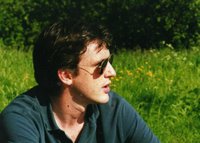 After graduating from Oxford University, Jamie Fraser has worked as an intellectual property lawyer in London for the last 7 years. He never would have been a contender.
-----------------------------------------------------------------------------------------
8th March 2007 East London
Thursday night and the queue was snaking round the corner of the block in the heart of the East End of London, a crowd keen to get into the York Hall to see the oldest annual inter-club amateur boxing fixture in the world; the Varsity boxing match. And this was the 100th match.
Objectivity, I leave to the scientists – I can’t pretend that I wasn’t beside myself with excitement, going in to see Oxford, my old university, fighting its mortal enemy in their 100th match. Also, I can’t pretend that seeing Nick Griffin, chairman of the odious British National Party (a far-right political party) and, apparently, a Cambridge boxing Blue himself, in the queue behind us, didn’t affect my judgment – you can always tell a university by the company that it keeps.
Inside the York Hall, the East End’s great boxing institution, the Oxford supporters were outgunned 5:1 – I sat in front of what turned out to be the Oxford coach’s family and friends. In front of me was an extremely vocal Oxford supporter sitting on his own. Throughout the evening, he was shouting and gesticulating to the Cambridge fans, seemingly willing to take on anyone who was going to disagree with him. Passions were definitely high - last year, Oxford won the Truelove Bowl after a four-year run of Cambridge success.
As hosts, Cambridge’s fighters entered the ring second to the soundtrack of their choice. Cambridge’s featherweight, Russ Glenn, never quite lived up to the teenage bedroom aggression of Guns’N’Roses’ ‘Paradise City’. Russ took a standing count in the first and was simply outclassed by Oxford’s John McCarthy. A clear decision to Oxford, with prizes being awarded by the world featherweight champion, Barry McGuigan.
Oxford’s Asa Goldring had a problem with his gloves, which delayed his entry into the ring – this, combined with the soft rock of Cambridge’s Tom Bennett-Britton, seemed to cast a shadow over the lightweight bout. After a scrappy start, Asa seemed to be making his mark, but was stopped cold by some fine boxing from Cambridge’s very able fighter. It was Oxford’s turn to take a standing count in the first round (although Tom did not appear to be sure where to find a neutral corner, which gave an impression that this had not happened before). Following a further standing eight in the second, the Oxford coach, Des Brackett, threw in the towel and Cambridge levelled off at one-all.
And so we progressed (in hindsight) to the match of the night – ‘Fast Hands’ Freddie Brown, Oxford’s light-welterweight, entered the ring with the poise of one who’d clearly been there before and knew what was expected. Cambridge’s Dave Hyman took to the ring with the majestic pipes and drums of ‘Highland Cathedral’ booming around the hall – although the assured look on his face soon disappeared as Freddie stared him down. Freddie lived up to his name – his punches were confident and quick, foisting a standing count on Cambridge in both the second and third rounds. The only surprise was that Freddie didn’t knock him out of the ring – “Do him, Freddie” screamed the contingent behind me. A unanimous verdict for Oxford and the score crept up to 2 – 1.
Both welterweights were returning Blues and showed it – Cambridge’s Rich Spandl and Oxford’s Matt Nice looking comfortable in the ring. Although Matt was pushed over, or maybe slipped, in the first round, he showed his superior strength and dominated the rest of the fight. The Cambridge fighter floundered in the second round, but Mr. Nice somehow lived up to his name and never finished him off. By the end of the third, Cambridge was barely hanging on and the unanimous verdict to Oxford was no surprise. 3 – 1 (this cumulative aspect of the running tally throughout the evening is one part of what makes the Varsity match so exciting).
Peter Taylor, Cambridge’s light-middleweight, had chosen a kind of uplifting drive time radio-style music and this carried over into his style – calm and concentrated. He set out in the first round with a nice, stylized low guard. Oxford’s Tom Hughes put up a fine defence, but ultimately was outgunned. A unanimous verdict for Cambridge and the tension ratcheted up just in time for the interval.
The sartorial sensibilities of the attendees at the York Hall usually encompass East End geezers in Gucci suits and aged coulda-been-a-contenders in tracksuits, but tonight was different. Apart from the referees, I don’t think that I had ever seen anyone in black tie on any of my previous visits to the York Hall – now the bar was awash with dinner jackets and the washed-out blue of Cambridge blazers. Most spectators chose to stay in the bar, rather than watch the light-heavyweight special challenge bout (notable for being four two-minute rounds) between Oliver Bowles of Cambridge University Amateur Boxing Club and Daniel Hendy from the University of Portsmouth. The Portsmouth connection was never explained and the fight went to Oliver Bowles. The result of this exhibition bout was not included in the running Varsity match score and the crowd came streaming back in for the second half of the evening’s proper business.
I had been warned by a friend to look out for Cambridge’s Ardil Salem, a law student from Manchester, by all accounts a bright lad and a dedicated boxer. Together with Oxford’s Ben Quigley, these two middleweights seemed to be more serious contenders and both showed a kind of class that had the crowd at the York Hall on its feet throughout the fight. Although some of Ardil’s punches were wild, looping hits, he managed to cause some problems for the Oxford boy in the first round. An even second round was followed by the first blood of the night in the third, as Ben took the fight back to Ardil, who finished the bout with a blood-stained vest. By a majority decision, the fight went to Oxford and the gap widened to 4 – 2.
More Guns’n’Roses heralded the entrance of Cambridge’s Simon Lehnis, but Oxford’s Dom McKean, a tall, rangy fighter didn’t appear fazed. After some good footwork from both fighters in the first round, the tension escalated in the second, as Dom landed a number of good points, snapping Simon’s head back on one occasion. Simon came back and got in a decent left, just before the bell for the end of the second. As the volume increased in the third round, the Cambridge fighter was throwing wild punches and eventually threw Dom to the floor, to his, and our, surprise. Dom appeared relaxed as he waited for the scores to come in from the judges and seemed to be nodding to his teammates that this might be it, the evening won. When the majority decision to Cambridge was read out, there was some anger from the Oxford ranks and, as Dom left the ring for the changing rooms, words were clearly exchanged with some in the crowd and a scuffle ensued in the stalls. Bouncers rushed to the scene and calm was restored – welcome to the jungle, lads. 4 – 3, with two fights still to go.
In the penultimate fight, the light-heavyweights, Cambridge’s Artem Korolev and Oxford’s Carl Walton, took it slowly and evenly in the first. Artem was definitely not taking any chances and showed a ridiculously high defensive style not seen in the ring since the 19th century. Oxford’s Carl stepped up the pace in the third, but his energy lagged and, not for the first time in the evening, we had a fighter who didn’t seem to know how to finish (to his credit, Carl has only been boxing for the last few months). The result was not an obvious one to call, but when the majority decision in favour of Oxford was announced, securing the Truelove Bowl for another year, the cries of “Easy! Easy!” rang out from our small vanguard. The Oxford team celebrated at the side of the ring and we shouted ourselves hoarse at the rest of the sullen and miserable crowd.
The two captains stepped up for the heavyweight finale, Cambridge’s Ed Andrews and Oxford’s James Webster, both returning Blues. Ed had a commanding presence and a long reach, but Oxford’s captain held his ground. In the second, Oxford appeared the stronger and Ed was on the ropes, with James chasing him. In the final round, the Cambridge captain tied James up and his head was down for the latter part of the round – although this may have been due to his loose head guard, which he had to have fixed on a number of occasions. Although the eventual outcome of a win for Cambridge was not a huge surprise, the unanimous verdict was – any serious objections were forgotten, however, as the Oxford team celebrated and we shouted and laughed and headed out into the night, all dark blue, all victorious.
-----------------------------------------------------------------------------------------------------
After graduating from Oxford University, Jamie Fraser has worked as an intellectual property lawyer in London for the last 7 years. He never would have been a contender.
3 Comments:
I read an Angelica Tarnowska article a few months back about white collar boxing and how it regained popularity in England a few years back, and she placed the roots of that renewed infatuation with "The Real Fight Club" in the fact that traders from the city and other business kinds started fighting in college and didn't want to stop.
But I had no idea that these confrontations existed
Jamie, Ian Hollett didn't box that evening. Ian pulled out at the last minute and forced us to field first-timer Asa Oldring in his place. We did think that Asa acquitted of himself well against a boxer who'd 19 more fights than him - and who had been boxing before Asa had even begun to think of his GSCEs.
pulling punchlines,
That's actually our bad not Jamie's. He emailed us to correct that and we were delinquent.
Our cap is doffed to Asa. Getting in the ring at all takes stones, getting in the ring in this kind of situation with a much more experienced fighter takes big stones.
Well done, young son.
Post a Comment
<< Home