Blood in the Water
Today is the 50th anniversary of one of the most politically charged events in the history of the Olympics – the water polo semi-final at the Melbourne Games between Hungary and the Soviet Union, known ever afterward as the “blood in the water” match.
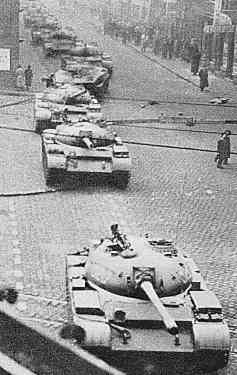 In October of 1956, a student protest sparked a revolution in Hungary against the Soviet-backed Communist regime. For almost three weeks, Hungary was in a state of full-scale nationwide revolt. The government was toppled, Communists were executed and imprisoned, the secret police disbanded. A provisional government formed and announced its plan to abandon the Warsaw Pact entirely.
At first, the Soviets pledged to negotiate a withdrawal of their troops. But on November 4th, with the West preoccupied by the Suez Canal crisis, Soviet tanks rolled into Budapest, killing untold numbers of civilians in a dramatic show of force. By November 10th, the resistance in Hungary was squashed, and a pro-Soviet government was being rebuilt. Hundreds of thousands of Hungarians fled the country in fear of Communist reprisal.
During this uprising, the Hungarian water polo team, defending Olympic gold medalists, were in training for the Melbourne Games in the mountains above Budapest. They were quickly moved to a training camp in Czechoslovakia, and would only learn of the full extent of the carnage when they arrived in Australia.
In October of 1956, a student protest sparked a revolution in Hungary against the Soviet-backed Communist regime. For almost three weeks, Hungary was in a state of full-scale nationwide revolt. The government was toppled, Communists were executed and imprisoned, the secret police disbanded. A provisional government formed and announced its plan to abandon the Warsaw Pact entirely.
At first, the Soviets pledged to negotiate a withdrawal of their troops. But on November 4th, with the West preoccupied by the Suez Canal crisis, Soviet tanks rolled into Budapest, killing untold numbers of civilians in a dramatic show of force. By November 10th, the resistance in Hungary was squashed, and a pro-Soviet government was being rebuilt. Hundreds of thousands of Hungarians fled the country in fear of Communist reprisal.
During this uprising, the Hungarian water polo team, defending Olympic gold medalists, were in training for the Melbourne Games in the mountains above Budapest. They were quickly moved to a training camp in Czechoslovakia, and would only learn of the full extent of the carnage when they arrived in Australia.
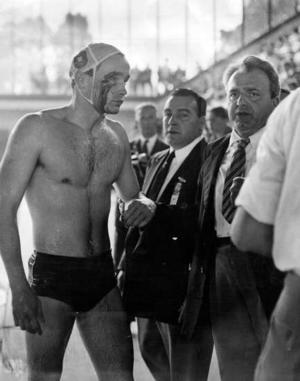 The Melbourne Games opened on November 22nd, 1956. The Soviets and the Hungarians met in the semifinals of the water polo tournament two weeks later, and the match was heavily covered in the media due to its political implications. The Hungarians were playing for their country as perhaps no other athletes have ever done, and the match, as its nickname connotes, was a bloodbath, one of the ugliest affairs ever contested at the Olympics. One of Hungary's best players, Ervin Zador, was the star of the game with two goals, but he was forced to leave late in the match after being blindsided by a Soviet player. Pictures of Zador emerging from the pool with blood dripping from his eye led to the “Blood in the Water” headlines around the world. It also led to a near-riot at the match itself, which was abandoned with a minute remaining due to the unruliness of the pro-Hungarian crowd. Hungary won, 4-0, and went on to defeat Yugoslavia in the final to win the gold. After the Games, a large portion of Hungary’s 100-member Olympics delegation defected.
A movie about the match, called “Freedom’s Fury” was screened last spring at the Tribeca Film Festival. It has not yet been released in theaters or on DVD. Below is the trailer:
The Melbourne Games opened on November 22nd, 1956. The Soviets and the Hungarians met in the semifinals of the water polo tournament two weeks later, and the match was heavily covered in the media due to its political implications. The Hungarians were playing for their country as perhaps no other athletes have ever done, and the match, as its nickname connotes, was a bloodbath, one of the ugliest affairs ever contested at the Olympics. One of Hungary's best players, Ervin Zador, was the star of the game with two goals, but he was forced to leave late in the match after being blindsided by a Soviet player. Pictures of Zador emerging from the pool with blood dripping from his eye led to the “Blood in the Water” headlines around the world. It also led to a near-riot at the match itself, which was abandoned with a minute remaining due to the unruliness of the pro-Hungarian crowd. Hungary won, 4-0, and went on to defeat Yugoslavia in the final to win the gold. After the Games, a large portion of Hungary’s 100-member Olympics delegation defected.
A movie about the match, called “Freedom’s Fury” was screened last spring at the Tribeca Film Festival. It has not yet been released in theaters or on DVD. Below is the trailer:
In October of 1956, a student protest sparked a revolution in Hungary against the Soviet-backed Communist regime. For almost three weeks, Hungary was in a state of full-scale nationwide revolt. The government was toppled, Communists were executed and imprisoned, the secret police disbanded. A provisional government formed and announced its plan to abandon the Warsaw Pact entirely.
At first, the Soviets pledged to negotiate a withdrawal of their troops. But on November 4th, with the West preoccupied by the Suez Canal crisis, Soviet tanks rolled into Budapest, killing untold numbers of civilians in a dramatic show of force. By November 10th, the resistance in Hungary was squashed, and a pro-Soviet government was being rebuilt. Hundreds of thousands of Hungarians fled the country in fear of Communist reprisal.
During this uprising, the Hungarian water polo team, defending Olympic gold medalists, were in training for the Melbourne Games in the mountains above Budapest. They were quickly moved to a training camp in Czechoslovakia, and would only learn of the full extent of the carnage when they arrived in Australia.
The Melbourne Games opened on November 22nd, 1956. The Soviets and the Hungarians met in the semifinals of the water polo tournament two weeks later, and the match was heavily covered in the media due to its political implications. The Hungarians were playing for their country as perhaps no other athletes have ever done, and the match, as its nickname connotes, was a bloodbath, one of the ugliest affairs ever contested at the Olympics. One of Hungary's best players, Ervin Zador, was the star of the game with two goals, but he was forced to leave late in the match after being blindsided by a Soviet player. Pictures of Zador emerging from the pool with blood dripping from his eye led to the “Blood in the Water” headlines around the world. It also led to a near-riot at the match itself, which was abandoned with a minute remaining due to the unruliness of the pro-Hungarian crowd. Hungary won, 4-0, and went on to defeat Yugoslavia in the final to win the gold. After the Games, a large portion of Hungary’s 100-member Olympics delegation defected.
A movie about the match, called “Freedom’s Fury” was screened last spring at the Tribeca Film Festival. It has not yet been released in theaters or on DVD. Below is the trailer:
posted by Large at 12:25 AM


5 Comments:
That dude that was punched in the face, thats happened to me before. and to all the people out there saying thats a tough dude, im a girl!!!!!!!!!!!!!!!!!!!!!!!!!!!!!!!
your such a lier! girls are toooooo stupid to get in a fight like that! loser!
you are such a jerk girl hater! it probably did happen and we arent stupid. maybe the blondes, but not us!
i am blonde you jerk. i can be dingy sometimes, but not in a water polo game!!!!!!!!!!!!!!!!!!!!
Wow, What a story!!!
Imagine if Hollywood got hold of this. Amazing!!!!
Post a Comment
<< Home