Deep Tennis with Steve Tignor
Steve - Growing up as a tennis fan, there were three essential racquets in my mind – Borg’s black Donnay, Mac’s Dunlop, and Connors’ metal Wilson atrocity. Also, as the racket I truly despised, I was aware that Lendl (as he would) used an utterly characterless Adidas piece of crap. So my question is, aside from those, what are the iconic rackets, either before or since the Borg and Mac era? Did Laver or Newcombe or any of those dudes have a certain racquet that everyone just knew was "their racquet?" Has a certain racquet defined a single player in the Borg/Donnay fashion in, say, the last 15 years of tennis?
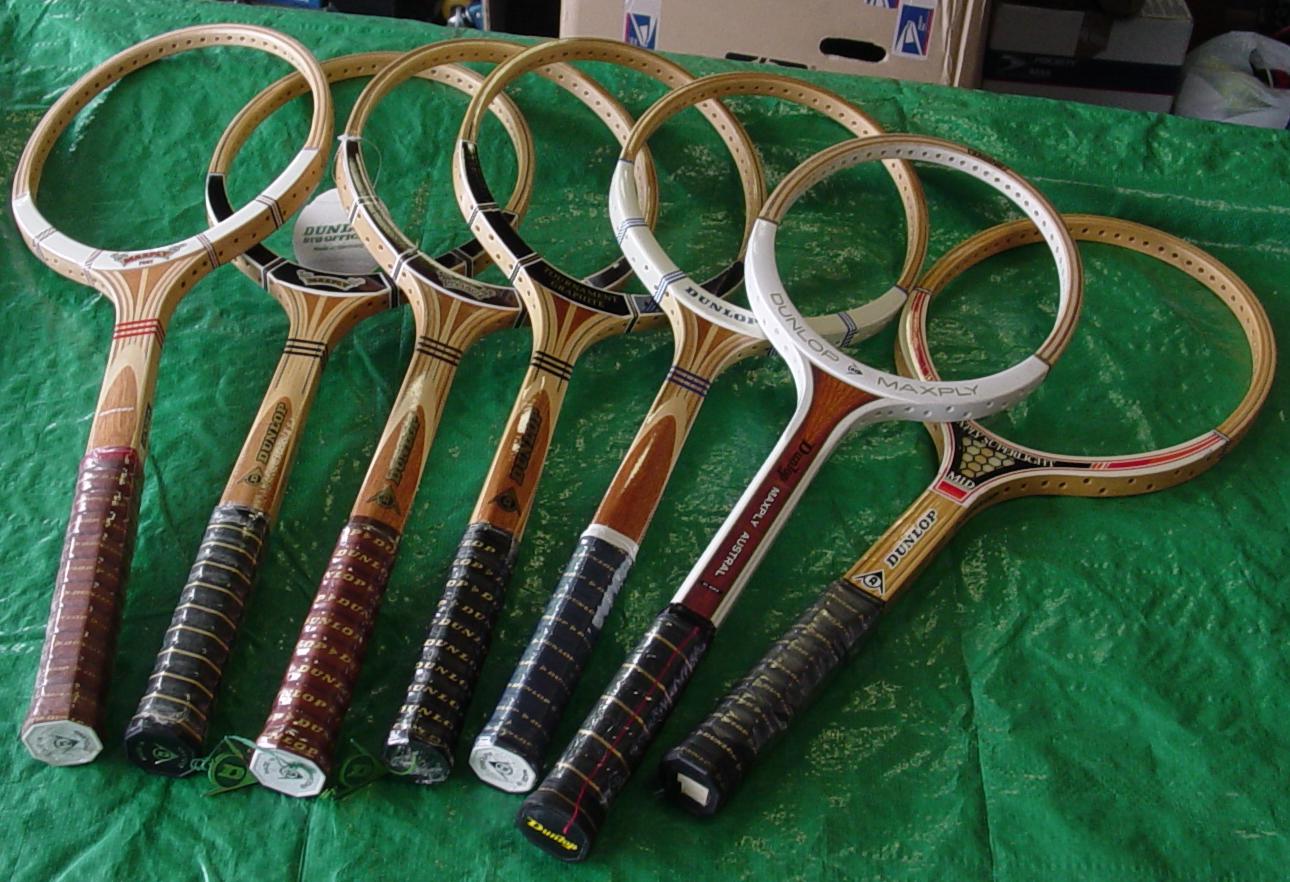 In tennis’ days of yore, a few high-quality racquets were enough to serve generations of champions. Two in particular stood out: The thin-beamed Dunlop Maxply used by, among many other champions, Rod Laver when he won the Grand Slam; and the Wilson Jack Kramer Autograph, known by its distinctive white throat and crown logo and wielded by more major-title winners than any other, including Chris Evert and Arthur Ashe. The Kramer was still the stick into the 1980s; it’s what Pete Sampras first took to the court.
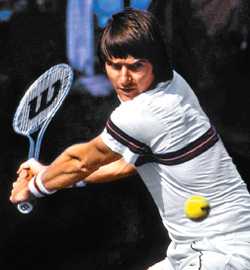 It was the onset of the professional era that changed the racquet landscape forever. There was more money at stake for players and manufacturers, and innovations began to flow. New materials were introduced in the late 1960s, most prominently in Jimmy Connors’ Wilson T2000 and the Slazenger Smasher, which were both made of metal; in 1976, the first oversize frame, the Prince Classic, made its debut; Pam Shriver put it on the map when she used it to reach the final of the 1978 U.S. Open as a 16-year-old.
By the early 1980s wood was on its last legs, as the top pros were switching en masse to midsize graphite frames. The last major holdout was McEnroe, naturally; his switch from the Maxply to the green-and-black graphite Dunlop Max 300G in 1983 officially spelled the end of the wood-racquet era.
The next few years were a golden age for tennis sticks. A couple modern classics were introduced, and the basic technology, despite today’s promotions for “liquidmetal” and “aerogel” and “nanotechnology,” hasn’t been altered much since. The Wilson K-Factor racquet (not to be confused with the NCode from two years ago) that Roger Federer currently plays with is a near-replica of the Wilson Pro Staff that Pete Sampras made famous.
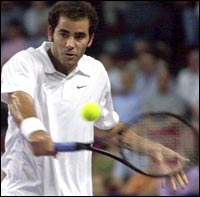 The Pro Staff is one of two iconic sticks from the 1980s that have never gone out of fashion. The other, the Prince Graphite, was used by Andre Agassi and Michael Chang. The simple excellence of those racquets! The names were minimalist, the colors were dark and basic—orange and black for the Pro Staff; green and black for the Graphite—and the frames were substantial and not-too-springy. You brought the power, the racquet helped you put the ball where you wanted it to go. Neither stick was for novices; the Pro Staff in particular had a sweet spot the size of a dime.
But there was no feeling quite like hitting it. In college I put down my McEnroe 200G (I’ve pretty much always played with the racquet of the No. 1 men’s player, moving from Borg’s Donnay to Mac’s 200G to Sampras’ Pro Staff and now to Federer’s K-Factor) one day, picked up a Pro Staff, and won the first match I played. It was that user-friendly. Over the years, I moved onto other racquets (there’s not much else you can do when a racquet company stops producing your frame; Sampras himself bought the last batch that Wilson manufactured) but every time I went back to the old Pro Staff I said to myself, “Yeah, that’s what hitting a tennis is supposed to feel like.”
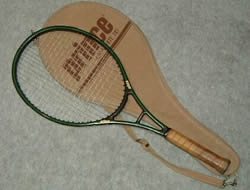 The same was true for the Prince Graphite. I used it exactly once, in college, after breaking strings in two other racquets. But like the Pro Staff, it was such a universal frame that my doubles partner and I went out and played what might have been the best match in our three years together, upsetting the No. 1 team in Division III that year (I never used the Graphite again and we never beat them again.)
 There wasn’t much you could improve on with these racquets. Despite the widespread belief that new racquets get more and more powerful and are at least partly responsible for ruining the sport, the pros still use basic, control-oriented frames. These guys have the power already. (There’s no doubt, however, that increased head size and lighter weights have allowed for the heavy topspin and huge swings that the pros employ today.) Sampras stuck with the Pro Staff until the end, and even while Agassi changed to Head later in his career, the racquets he used later in his career were not markedly different from the good old Prince Graphite.
What are the iconic racquets of today? With Wilson, Prince, and Head churning out new models and discontinuing old ones every couple years, it’s hard for any one racquet to gain traction. Not to mention that names like NCode, K-Factor, AeroGel 300, and O3 Speedport Red have none of the simple, memorable gravitas of “Pro Staff” and “Graphite.”
The one stick that has made its mark this decade is Big Blue, the Babolat Pure Drive, which is used by many pros, most famously Andy Roddick. It’s bright and attractive, has a distinctive two-line stencil on its strings, and does a good job of blending heft with light weight—it’s the icon of the widebody age. Just as important, Babolat, a French company known mostly for producing excellent guy strings for the last century, has also given it a chance to become a signature stick by keeping it in production and introducing very few other ones around it. Whether it will match the staying power of the Autograph or the Graphite is yet to be seen, but these days, any racquet that’s around long enough to actually be recognized qualifies as a classic.
----------------------------------------------------------------------------------------
Steve Tignor is the executive editor of Tennis magazine - for more of his writing, check out his weekly column, The Wrap, on the Tennis website.
In tennis’ days of yore, a few high-quality racquets were enough to serve generations of champions. Two in particular stood out: The thin-beamed Dunlop Maxply used by, among many other champions, Rod Laver when he won the Grand Slam; and the Wilson Jack Kramer Autograph, known by its distinctive white throat and crown logo and wielded by more major-title winners than any other, including Chris Evert and Arthur Ashe. The Kramer was still the stick into the 1980s; it’s what Pete Sampras first took to the court.It was the onset of the professional era that changed the racquet landscape forever. There was more money at stake for players and manufacturers, and innovations began to flow. New materials were introduced in the late 1960s, most prominently in Jimmy Connors’ Wilson T2000 and the Slazenger Smasher, which were both made of metal; in 1976, the first oversize frame, the Prince Classic, made its debut; Pam Shriver put it on the map when she used it to reach the final of the 1978 U.S. Open as a 16-year-old.By the early 1980s wood was on its last legs, as the top pros were switching en masse to midsize graphite frames. The last major holdout was McEnroe, naturally; his switch from the Maxply to the green-and-black graphite Dunlop Max 300G in 1983 officially spelled the end of the wood-racquet era.
The next few years were a golden age for tennis sticks. A couple modern classics were introduced, and the basic technology, despite today’s promotions for “liquidmetal” and “aerogel” and “nanotechnology,” hasn’t been altered much since. The Wilson K-Factor racquet (not to be confused with the NCode from two years ago) that Roger Federer currently plays with is a near-replica of the Wilson Pro Staff that Pete Sampras made famous.
The Pro Staff is one of two iconic sticks from the 1980s that have never gone out of fashion. The other, the Prince Graphite, was used by Andre Agassi and Michael Chang. The simple excellence of those racquets! The names were minimalist, the colors were dark and basic—orange and black for the Pro Staff; green and black for the Graphite—and the frames were substantial and not-too-springy. You brought the power, the racquet helped you put the ball where you wanted it to go. Neither stick was for novices; the Pro Staff in particular had a sweet spot the size of a dime.But there was no feeling quite like hitting it. In college I put down my McEnroe 200G (I’ve pretty much always played with the racquet of the No. 1 men’s player, moving from Borg’s Donnay to Mac’s 200G to Sampras’ Pro Staff and now to Federer’s K-Factor) one day, picked up a Pro Staff, and won the first match I played. It was that user-friendly. Over the years, I moved onto other racquets (there’s not much else you can do when a racquet company stops producing your frame; Sampras himself bought the last batch that Wilson manufactured) but every time I went back to the old Pro Staff I said to myself, “Yeah, that’s what hitting a tennis is supposed to feel like.”
The same was true for the Prince Graphite. I used it exactly once, in college, after breaking strings in two other racquets. But like the Pro Staff, it was such a universal frame that my doubles partner and I went out and played what might have been the best match in our three years together, upsetting the No. 1 team in Division III that year (I never used the Graphite again and we never beat them again.)There wasn’t much you could improve on with these racquets. Despite the widespread belief that new racquets get more and more powerful and are at least partly responsible for ruining the sport, the pros still use basic, control-oriented frames. These guys have the power already. (There’s no doubt, however, that increased head size and lighter weights have allowed for the heavy topspin and huge swings that the pros employ today.) Sampras stuck with the Pro Staff until the end, and even while Agassi changed to Head later in his career, the racquets he used later in his career were not markedly different from the good old Prince Graphite.What are the iconic racquets of today? With Wilson, Prince, and Head churning out new models and discontinuing old ones every couple years, it’s hard for any one racquet to gain traction. Not to mention that names like NCode, K-Factor, AeroGel 300, and O3 Speedport Red have none of the simple, memorable gravitas of “Pro Staff” and “Graphite.”
The one stick that has made its mark this decade is Big Blue, the Babolat Pure Drive, which is used by many pros, most famously Andy Roddick. It’s bright and attractive, has a distinctive two-line stencil on its strings, and does a good job of blending heft with light weight—it’s the icon of the widebody age. Just as important, Babolat, a French company known mostly for producing excellent guy strings for the last century, has also given it a chance to become a signature stick by keeping it in production and introducing very few other ones around it. Whether it will match the staying power of the Autograph or the Graphite is yet to be seen, but these days, any racquet that’s around long enough to actually be recognized qualifies as a classic.
----------------------------------------------------------------------------------------
Steve Tignor is the executive editor of Tennis magazine - for more of his writing, check out his weekly column, The Wrap, on the Tennis website.


7 Comments:
Agasi's radical was the most badass when i was the kid since they were matching the air tech challenges.
But I have a question, I know Cedric Pioline was using the prince that pat cash was using then when it was discontinued, he started using a Head and finished his career with either a Dunlop or a Wilson.
Are there many players who switch brands during their careers?
And what is the name of the brand of racquets Thomas Muster was playing with? I remember he had some bags that looked like Adidas Mutombo gear
Somewhere I still have the old Prince Graphite and the Pro Staff. I need to dig those up.
I always liked Andre's Head racquet but when I went to make a purchase I got the Fischer made popular by Yevgeny. Silky smooth...even if I haven't picked it up in two years.
MS - Here's an answer directly from Steve - I wrote to him today:
It seems like most players either don’t change (Sampras) or change once. The pros really don’t like to mess with a good thing. Even Agassi, who switched from Donnay to Prince to Head, used a very similar frame at each place.
Muster, as far as I know, went from Head to a European company, Kneissl, maker of the much-maligned Lendl special of the early 80s (before he went to adidas).
thanks a million
not bad...the original red Head prestige (smaller head)was a badass stick (Ivanisevic, Philipoussis) ...as well as the blue Head that Muster used...
The Original Pro Staff that Sampras,Edberg Courier and Mary Pierce all hoarded came from a factory in St Vincent that burned down...
Steve,
Great article on vintage rackets. I wanted to further the dicussion of wooden rackets from the 70's. The first racket Borg ruled with was a Bancroft 'Bjorn Borg Personal'. This racket had a gorgeous black laquer throat with black and white Bancroft/BJ logos stenciled along with and ash head. It was complimented by the white vinyl racket cover with a black Bancroft insignia placed across the cover diagonally. Then Borg switched to the Donnay Allwood. This stealthy black racket had the light orange to red to purple rainbow that started from the bottom of the racket head and spilled onto the top of the throat. The top the racket was ash (ala the Borg Bancroft model) while the rest of the racket was all black with DONNAY stenciled in white just above the hand grip, also black. It had a matching rainbow on black racket cover. Finally came the Darth Vadar of the Donnay rackets, the Borg Pro. An all black affair except for graduated rainbow markings which were limited to dark oranges and reds. The markings gradually became smaller and extended onto the top of the racket head as well as the bottom of the racket head.It should also be noted that the Borg Pro was the first Borg racket sold for retail that extended the (brown) hand grip for double handed backhands. (Borg always had the double grip on his personal rackets)
The other wooden rackets I wanted to mention were the Guillermo Vilas Head racket that had the dark brown wood laminate(?) with the open throat and orange pin stripe border as well as the Illie Nastase Adidas wooden model with the large trefoil and three stripes on its throat. The Nastase had a great vinyl racket cover with a sweet Adidas stencil.
Lendl's Adidas stick was always a Kneissl White Star painted...Becker's Estusa was also a classic...the story i know is that he bought the mold for the racket before they went out of business...
Post a Comment
<< Home