Pawns in the Game
NO MAS BOOK REVIEW
The Kings of New York
Michael Weinreb
(Gotham Books, 288 p.)
The dust-jacket of this book contains an effusive blurb from the august Chuck Klosterman - "The Kings of New York is the Friday Night Lights of high school chess." Well, that's certainly what I was hoping for when I first read about Weinreb's project, following an unlikely championship chess team from Brooklyn through an entire season of tournaments and turmoil, and in the process shining a light on the unlikely world of New York City's youth chess subculture.
Unfortunately, this book falls far short of the mastery of Friday Night Lights, which is a shame, because there's a great book to be written here. The problem, I think, is the author's scope. He tries to do far too much, to tell the story of every character even remotely connected to his story, and thus ends up with a book that at times is so disjointed and wrought with dead ends that it's difficult to plow through to the finish. Is this a book about the dying public school system in New York City? Is it about the success of the various youth chess programs the city offers? Is it a layman's history of chess in the last forty years? Or is it a book about a single high school chess team in Brooklyn that has defied the odds and become the best and most recognized team in the nation?
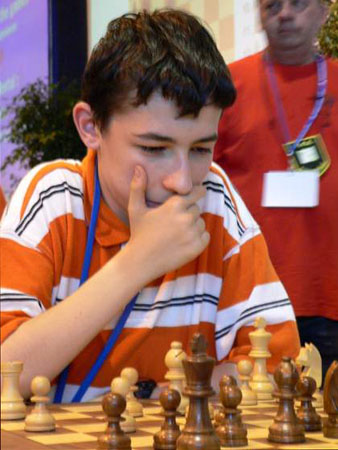 By far Weinreb is at his strongest when he sticks close to the latter, focusing his energies on the chess team at Edward R. Murrow high school in the Midwood neighborhood of Brooklyn. He brings the young personalities to life without pandering and does a thorough job of charting the diverse paths that brought the team together - Oscar Santana, Willy Edgard and Shawn Martinez, the Latino ne'er-do-well savants who are almost as obsessed with late-night poker games as they are with chess, Sal Bercys and Alex Lenderman (pictured right), petulant and enigmatic Eastern European transplants who happen to be two of the best young chess players in America, and Ilya Kotlyanskiy, the team captain, a Ukrainian immigrant who defies all the chess stereotypes by being handsome, together, and driven to succeed in the world outside of chess, which, it seems, often hinders him in a pursuit that demands a single-minded obsession bordering on madness.
One character of this team that I could have done with a little more investigation of is the mastermind of the whole Murrow chess phenomenon, teacher and coach Eliot Weiss. Weiss seems like one of those inner-city saints who lives and toils in relative anonymity while doing work that in a more just world would put him on the cover of magazines. He singlehandedly built his chess program into a nationwide powerhouse through tireless devotion, recruiting his players from youth chess programs in NYC - The Right Move and Chess in the Schools - to field a public school squad of misfits that consistently defeats the elite private school teams in the city, not to mention all of the other high school chess teams in the United States.
In the end, I was captivated by this aspect of the story, particularly the last fifty pages or so, when Weinreb drops his constant shuffling between narratives and focuses on the Murrow team and its struggles at the state and national tournaments. For that alone, The Kings of New York is a worthy read. And even beyond the charming personalities of the Murrow players, there's a lot to be learned about chess culture in this book, from the long shadow still cast by Bobby Fischer to the absolutism of the Elo ratings system to the rigors of the Washington Square hustling scene to the threat that the popularity of the high-stakes poker boom poses to the chess world at large. I warn you, though - you'll learn all of this in the most haphazard fashion imaginable, almost as if you were being regaled by a chess player himself, one of the idiot savant variety you see at the tables in the park, bearded and wild-eyed and a font of privileged information, if only you can decipher the inscrutable code that governs his stream of consciousness.
2 Comments:
When do you find the time to read?
Mostly when I'm in the loo. That's also where I do my best thinking innit.
Post a Comment
<< Home