No Mas Book Review: The Blind Side
By Steven L. Isenberg

Some No Masians may well have already found their way to Michael Lewis’s The Blind Side whether from having read his Moneyball, Liar’s Poker, his New York Times Magazine pieces on his old baseball coach in Louisiana, or the one that is a slice of this book itself. It was my good luck that your man, Christopher, my son, gave it to me.
The ingredients of The Blind Side are common enough: the drive to win and tactical necessities; coaches of idiosyncracy, imagination, myopia, opinion and ego; professional salaries and star status; high school and college proving grounds; academics and athletes; recruiting and rules; race and poverty as destiny and determiners, and those who would undo that knot; big ambitions and good hearts; and the frame of the South for the picture.
And yet Blind Side’s theme of transformation and its unlikely connections of character and circumstance give renewed vivacity to commonalities.
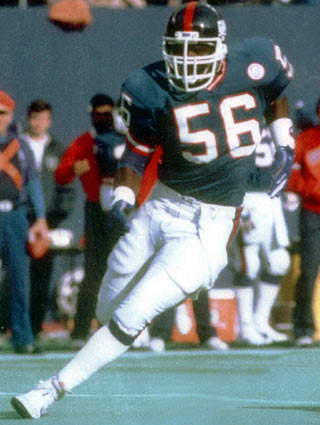 The pivotal element is the bone-chilling and bone-breaking success of Lawrence Taylor, the specter of his attacks on quarterbacks from their blind side. If nature abhors a vacuum, so too does an NFL coach. Hence, the recasting of the offensive left tackle to become a lynch pin of a winning team.
The physical and skill requirements for this new role changed a position of forgotten names and numbers into one of top draft choices and salaries. Inevitably and urgently, that merger of necessity and opportunity would make its way into college and high school football.
And so the connection to a lonely, abandoned, unschooled African American boy from the Memphis projects, who becomes embraced by a white, evangelical family, and a school whose motto is “Decidedly Academic, Distinctly Christian,” and eventually the Ole Miss football team.
This tale of nature and nurture, the escape from loneliness, neglect, squalor and silence, is of the creation of a new life for Michael Other, who at sixteen looked to be six feet five inches and 330 pounds, with feet of astonishing agility, and tested at an IQ of 80.
The moving forces are accident, good will, good fortune and purposeful kindness. It is the sports fervor and savvy, generous and directing instincts and unshakable and shrewd resolve of Sean and Leigh Anne Touhy that shape Oher’s awakening and future.
Sean, a high school pal of Lewis, is a fast food entrepreneur with the heartbeat, humor and court sense of an old jock, a scrappy basketballer of drive, who stands with wonder at how his wife takes matters in hand. Leigh Anne, once a cheerleader at Ole Miss, where Sean set an NCAA record for assists (the right metaphor for his role in TBS) becomes for Oher a maternal player-coach who gives new meaning to alma mater.
It is the Touhy family, with their daughter, Collins and son Sean Jr., who provide provisions and visions, willpower and wherewithal, welcome and warmth, to a boy who has only known drift and dislocation. For them, and thus for Oher, where there is a will, there is a way and, interestingly, it is not seemingly ground in the Will and the Way, but worldly paths.
Lewis’s story of Oher is a born again one. Oher had been so cut off from schooling he is without primers of how to think and fundamentals of knowledge. His IQ test is irrelevant. The only test score that appears germane to a boy who could grow up to shield quarterbacks is his high score on protective instincts. What we see and marvel at in Lewis’s retelling is a coming of age transformation where weeks and months stand for years in building for a teenager a new inventory of trust, thought, knowledge and habits.
The plotting quickens our interest as it begins with the mysterious silence and deep reserve of a young man sought out by one of the nation’s top spotters and rankers of high school football talent. Lewis then traces the history of the adoption of Oher, and how his natural, prodigious body and his tutored mind carry him from private school, and are carried by pleas and pressures, schemes and love, astonishingly to college eligibility and the avid press of football coaches.
Lewis does this in an idiom and muscular style common to serious journalism on contemporary matters. Sometimes this means, for me, some turgid patches in the NFL zones (for those with an quenched appetite for the mood and manner of NFL life, see Adam Gopnick’s very good piece in The New Yorker’s January 8 edition which mentions TBS).
I left TBS with a small wish for a novelist’s touch as to know more on the interior life of all I had met. Nonetheless, Lewis’s rightly way leaves the reader to be taken in by the compelling wonder of the story, but not to evade what disconcerts when considering the Touhys’ goodness, mother wit and steely determination, the academic bendings and the place of football in a university, and how the rescue of Oher’s life is a triumph that cannot help but remind the Touhys and us of how many are left behind.
8.5 out of 10
-------------
Steven L. Isenberg is the Visiting Professor of Humanities at the University of Texas at Austin, where his well-populated courses include my personal favorite--Literary Journalism: The Violent Worlds of War, Murder, and Boxing. He was formerly the publisher of New York Newsday and the Chief of Staff for Mayor John Lindsay. He is also the author of many of young I-Berg's neurotic complexes and feelings of inadequacy.
Some No Masians may well have already found their way to Michael Lewis’s The Blind Side whether from having read his Moneyball, Liar’s Poker, his New York Times Magazine pieces on his old baseball coach in Louisiana, or the one that is a slice of this book itself. It was my good luck that your man, Christopher, my son, gave it to me.
The ingredients of The Blind Side are common enough: the drive to win and tactical necessities; coaches of idiosyncracy, imagination, myopia, opinion and ego; professional salaries and star status; high school and college proving grounds; academics and athletes; recruiting and rules; race and poverty as destiny and determiners, and those who would undo that knot; big ambitions and good hearts; and the frame of the South for the picture.
And yet Blind Side’s theme of transformation and its unlikely connections of character and circumstance give renewed vivacity to commonalities.
The pivotal element is the bone-chilling and bone-breaking success of Lawrence Taylor, the specter of his attacks on quarterbacks from their blind side. If nature abhors a vacuum, so too does an NFL coach. Hence, the recasting of the offensive left tackle to become a lynch pin of a winning team.The physical and skill requirements for this new role changed a position of forgotten names and numbers into one of top draft choices and salaries. Inevitably and urgently, that merger of necessity and opportunity would make its way into college and high school football.
And so the connection to a lonely, abandoned, unschooled African American boy from the Memphis projects, who becomes embraced by a white, evangelical family, and a school whose motto is “Decidedly Academic, Distinctly Christian,” and eventually the Ole Miss football team.
This tale of nature and nurture, the escape from loneliness, neglect, squalor and silence, is of the creation of a new life for Michael Other, who at sixteen looked to be six feet five inches and 330 pounds, with feet of astonishing agility, and tested at an IQ of 80.
The moving forces are accident, good will, good fortune and purposeful kindness. It is the sports fervor and savvy, generous and directing instincts and unshakable and shrewd resolve of Sean and Leigh Anne Touhy that shape Oher’s awakening and future.
Sean, a high school pal of Lewis, is a fast food entrepreneur with the heartbeat, humor and court sense of an old jock, a scrappy basketballer of drive, who stands with wonder at how his wife takes matters in hand. Leigh Anne, once a cheerleader at Ole Miss, where Sean set an NCAA record for assists (the right metaphor for his role in TBS) becomes for Oher a maternal player-coach who gives new meaning to alma mater.
It is the Touhy family, with their daughter, Collins and son Sean Jr., who provide provisions and visions, willpower and wherewithal, welcome and warmth, to a boy who has only known drift and dislocation. For them, and thus for Oher, where there is a will, there is a way and, interestingly, it is not seemingly ground in the Will and the Way, but worldly paths.
Lewis’s story of Oher is a born again one. Oher had been so cut off from schooling he is without primers of how to think and fundamentals of knowledge. His IQ test is irrelevant. The only test score that appears germane to a boy who could grow up to shield quarterbacks is his high score on protective instincts. What we see and marvel at in Lewis’s retelling is a coming of age transformation where weeks and months stand for years in building for a teenager a new inventory of trust, thought, knowledge and habits.
The plotting quickens our interest as it begins with the mysterious silence and deep reserve of a young man sought out by one of the nation’s top spotters and rankers of high school football talent. Lewis then traces the history of the adoption of Oher, and how his natural, prodigious body and his tutored mind carry him from private school, and are carried by pleas and pressures, schemes and love, astonishingly to college eligibility and the avid press of football coaches.
Lewis does this in an idiom and muscular style common to serious journalism on contemporary matters. Sometimes this means, for me, some turgid patches in the NFL zones (for those with an quenched appetite for the mood and manner of NFL life, see Adam Gopnick’s very good piece in The New Yorker’s January 8 edition which mentions TBS).
I left TBS with a small wish for a novelist’s touch as to know more on the interior life of all I had met. Nonetheless, Lewis’s rightly way leaves the reader to be taken in by the compelling wonder of the story, but not to evade what disconcerts when considering the Touhys’ goodness, mother wit and steely determination, the academic bendings and the place of football in a university, and how the rescue of Oher’s life is a triumph that cannot help but remind the Touhys and us of how many are left behind.
8.5 out of 10
-------------
Steven L. Isenberg is the Visiting Professor of Humanities at the University of Texas at Austin, where his well-populated courses include my personal favorite--Literary Journalism: The Violent Worlds of War, Murder, and Boxing. He was formerly the publisher of New York Newsday and the Chief of Staff for Mayor John Lindsay. He is also the author of many of young I-Berg's neurotic complexes and feelings of inadequacy.
17 Comments:
I saw Lewis talking about this book on Colbert a few months ago. Definitely got me interested, but I had a huge book list to get through, and never got to it. Since this book got the No Mas seal of approval, I'm gonna add this to my list and check it out. Large, you guys should start a No Mas book club. Seriously.
If I can get a quorom of ten in NYC to show, we will do a book club event. Put it on the wire if you are ready to help make a minion.
ci
Wow, the senior Isenberg...a glorious day indeed.
As soon as this came out it jumped to the top of my to-read pile.
a small wish for a novelist’s touch as to know more on the interior life of all I had met
I couldn't agree more.
i want to take your dad's journalism class! i could do a book club if i took an 8 hour train from mtl to nyc. i wouldn't put it past myself.
Seems like we should do something ofline and online.
Have a smalller gathering in NYC and out-of-towners can write in?
May I hear nominees for first book?
Online/Offline book club is a great idea to get people involved. I'm in Toronto, but have been planning a trip to NY to visit my cousin in the 718. Just give me a month or 2 notice and I can probably make it in.
As far as a first nominee, it might be bad form to nominate a book that I have yet to read, but I have heard a lot of buzz about William C. Rhoden's book '40 Million Dollar Slaves: The Rise, Fall and Redemption of the Black Athlete'
What do you guys think?
I haven't read that.
SLI, have you?
We'll maybe set a date in amonth or so for locals and online and in two months in case any out of towners want to plan...
How long is the Rhoden book? Maybe we should start with the Old man and the Sea.
This just in from my Pop for the curious,books which have been on the reading list from "Literary Journalism: The Violent Worlds of War, Murder, and Sport":
George Orwell: Homage to Catalonia
Michael Herr: Dispatches
Bowden: Black Hawk Down
Evan Wright: Generation Kill
Fergal Keane: Season of Blood
Hunter S. Thompson: Hells Angels
Capote: In Cold Blood
Mailer: Executioner's Song
Buzz Bissinger: Friday Night Lights
Nick Tosches: The Devil and Sonny Liston
David Remnick: King of the World
plus and essays by A.J. Liebling and Gay Talese
I've notched everything except Fergal Keane and Executioner's Song. Generation KIll is the tits. Best thing Iraq I've read by far.
we should get some george plimpton up in that shit.
I was a little late to the party on it, but I read Bronx is Burning Last month and I thought that was fucking incredible. If anyone wants to do that for Book Club I'd be down and I think I could get us some good speaker from that era too.
That would maybe be my vote for two months from now or beginning of baseball season. I can host it at my folks place in Manhattan.
ci
According to the Internets, the Rhoden book is 304 pages.
I'm only shooting 1 for 11 on Pop's list, but anything by Orwell or Thompson is good with me. So I'll check some of those out. I've seen the movie's for BHD and FNL, but I much prefer reading the book before watching the film, the books are always superior. (that's why I haven't watched any of the LOtR yet)
What is the criteria for books on the No Mas booklist?
I read rhoden regularly in the new yrok times, but have not read his book. foldy is right, plimpton deserves a place for paper lion or shadow box or other essays. sli
footballers: check out today's weekend journal section of the wall street journal for a piece on NFL football coming to china and especially the translations, e.g. "sack" becomes "capture the commander in chief." sli
My pop casts his net wider down at UT, but for No Mas book Club I think criteria should only be that it is more directly sports related. Bronx is Burning is really great because it is ostensibly about sports but also gets into Studio 54, graffiti, Koch vs. Cuomo, and the great Blackout of '77.
As the segment of sports intelligentsia likely to actually show for one of these is definitely gonna be heavy on Renaisssance men, I think the book should like Bronx or Rhoden's give us a chance to shoot the wider shit.
For Bronx is Burning, I think I could get my man Norman Steisel who was sanitation commish in '77 and Dinkins Deputy Mayor to join us. "Mr. Taste and Mr. Waste" as he was known to us in the day, was an expert on city politics and potato latkes, a swordsman of no small reknown, and the man who first took me to Chinese Chan's which had the bomb Chinese food and a video game room in the back with Galaga and mission control. That place was THE spot. He also had a siren and loudspeaker on the roof of his car that allowed I-Berg's Jr. and Sr. to shout obscenities at unwitting passers-by.
He will have a lot to say about '77.
What say you good people?
Yo I-berg, your pops would have some valuable insight for Bronx is Burning - I've been curious to ask him about that anyway. That book is very tough on Lindsay on the whole.
Did you know that Bronx is Burning is being made into an ESPN original movie? John Turturro as Billy the Kid.
Make the event sometime during the March 24-25 weekend and I'm there.
wow mr i, thanks for reviewing the book. coincidentally i gave my dad a copy of it for christmas, however, he didn't read it, which gave me a chance to do so.
i've managed to absorb half the book and something didn't seem right to me about it- the tuhoys as patron saints... the idea that the tuhoys would have taken such an interest in michael if he were a gay clarinet player, is preposterous in my opinion.
i didn't know lewis was old friends with sean tuhoy and maybe that explains the tone of this book- it almost seems tongue-in-cheek at times. i.e., lewis knows the reality of what some people will do to win and applauds it (moneyball was similar). then again, i may just be reading it too stiffly and i'm not even completely done with the read. just a thought though.
as for a book club, i don't know if anyone has read "when nothing else matters" by michael leahy. if no mas is about the position of sports heroes within our culture, it is the perfect choice. jordan on his last legs, doing what any one of us would wish we could do in his shoes.
Post a Comment
<< Home