Keeneland: Horse racing as it was meant to be
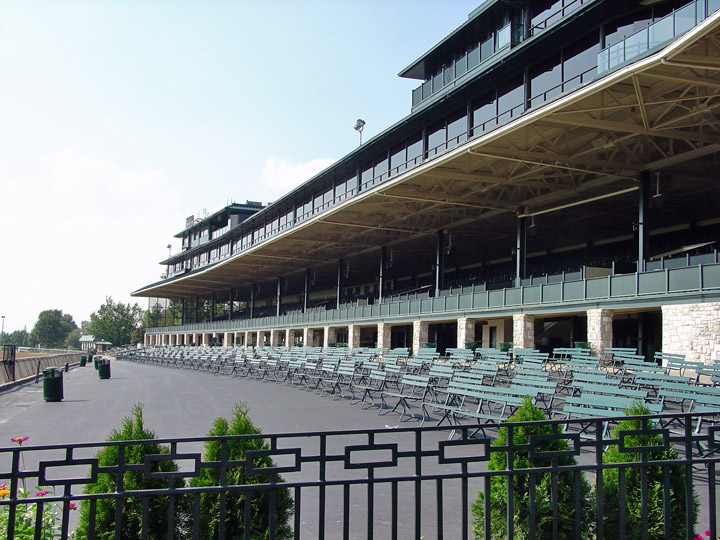 Keeneland racecourse, the track just outside
 In layout and design, Keeneland is lovely, which makes it a favorite meeting place for people, even if they don’t especially know anything about horses. Unlike many American tracks, it looks more like a park than an industrial complex, and the track is set in the nearly flat bluegrass landscape.
From above, the area looks emerald from the new grass that grows everywhere. And this race track is an emerald set with jewels of blooming trees and shrubs. The forsythia shrubberies are blooming yellow, the pear trees are white, and the redbuds are a rich pink. Soon, the dogwood and crab apples will add their blossoms to the mix.
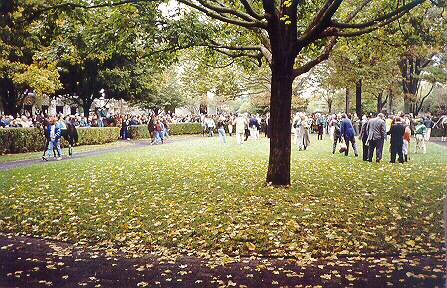 Patrons approach the track under avenues of tall oaks, and even the doorways at Keeneland tend to be tall Roman arches of cut stone that add an air of grandeur and inclusiveness.
As you stand watching races or inspecting the steeds being saddled for the next race, hard-eyed betters stand near boys and girls skipping school to come to the track. Millionaires mingle with grooms as horses and their people prepare for racing. And the
Keeneland distinguishes the gruff from the genteel, the scuffed from the polished but does it in the quiet, Southern pattern of social differentiation that offends only those who don’t understand it.
The common denominator for all these people is the horse. The Thoroughbred is the emblem of a way of life that was once widespread, and yet proved too good for modern society to sustain. We find it fleetingly at special places with good companions and particularly in connection with the grand horses that are the focus of racing.
And at Keeneland, the horses are fabulous.
Kentucky Derby winner Funny Cide came to Keeneland to race in an allowance on Friday’s opening card. Champions may appear in the track’s daily stakes features, and potential new stars will be found in some of the season’s earliest maiden races for 2-year-olds and for budding 3-year-old racers.
Before each race, the grooms lead the horses over from the stables and through the stone entrance into Keeneland’s vast saddling paddock. Under the towering trees, the sleek brown horses circle for the trainers and owners, who watch in anticipation for signs of an especially gifted athlete.
Once tacked up with saddle and accoutrements, the horses move into the walking ring. There they prance in line. Owners stand inside the walking ring, talking to trainers about their horse’s prospects. Betters, outside the ring, are three to five people deep around the hedge and are searching for a sense of which animal is ready to win.
Once the jockeys are up, the horses come onto the track, enter the starting gate, and the race is on. Another piece of history is about to be made.
----------------------------------------------------------------------------------------
Frank Mitchell writes a column on Thoroughbred bloodlines for Daily Racing Form that can be found at drf.com. He has written two books, Racehorse Breeding Theories and Great Breeders and their Methods: The Hancocks. Mitchell lives on a farm where he writes and raises horses about 30 minutes from Keeneland. He'll be appearing here on No Mas with articles about horse racing past and present. We're thrilled to have him aboard.
3 Comments:
awesome- keeneland is the best time in the world and kentucky's little secret. no mas and horse racing is sweet.
¿qué sobre toda la gente quiénes no tienen una voz, que se ocupará de ella?.
"..southern pattern of social differentiation that only offends those who don't understand it..."--what? this is 2007...leave this stuff to the gone with wind'" crowd...
Post a Comment
<< Home